

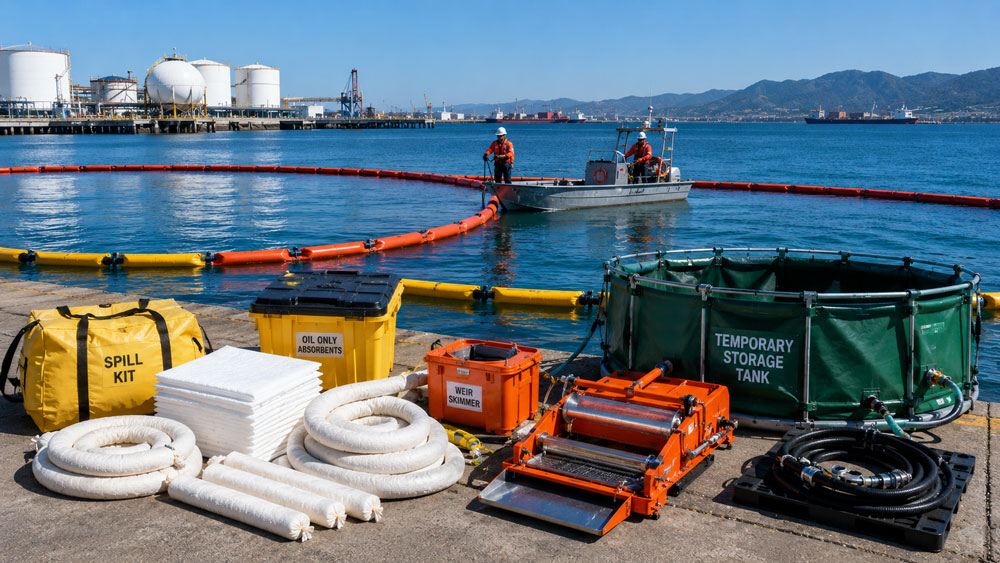
Oil spill response is not only about cleaning up oil after an accident. It is a complete system designed to prevent, contain, recover, store, and control oil spills before they spread into a larger environmental and operational problem.
For ports, shipyards, LNG terminals, oil and gas facilities, workshops, warehouses, industrial plants, marine contractors, and emergency response teams, having the right oil spill response equipment is an essential part of daily safety management.
Different spill risks require different solutions. A small hydraulic oil leak in a workshop may only require absorbent pads and a spill kit. A floating oil spill at a port may require oil containment booms, skimmers, pumps, reels, and temporary storage tanks. An IBC storage area or fueling station may require spill containment berms or secondary containment systems before any spill occurs.
This guide explains how oil spill response equipment works, how different products are used, and how to choose the right solution for marine, onshore, and industrial spill control applications.
Oil Spill Response refers to the equipment, procedures, and strategies used to control oil, fuel, lubricants, hydraulic oil, and other hydrocarbon spills.
A complete oil spill response system usually includes five key steps:
1. Prevention – reducing the chance of spills before they happen.
2. Containment – stopping spilled oil from spreading.
3. Absorption or Recovery – removing oil from land or water.
4. Temporary Storage – safely storing recovered oil or oily water.
5. Disposal and Site Cleaning – handling contaminated materials properly.
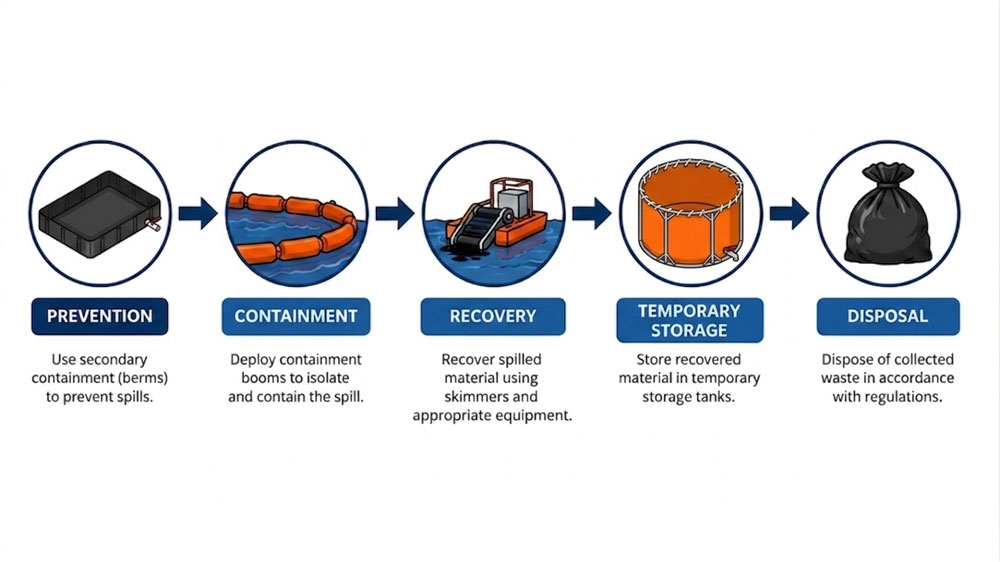
This is why oil spill response should not be treated as a single product purchase. It should be planned as a complete system based on the spill location, oil type, spill volume, water condition, response time, and site operation requirements.
Oil spill response equipment can be divided into several major categories. Each category plays a different role in spill control.
Oil absorbents are used to absorb oil, fuel, diesel, lubricants, hydraulic oil, and other hydrocarbon liquids. They are commonly used for small to medium spills on land, in workshops, around machinery, near fuel tanks, and on calm water surfaces.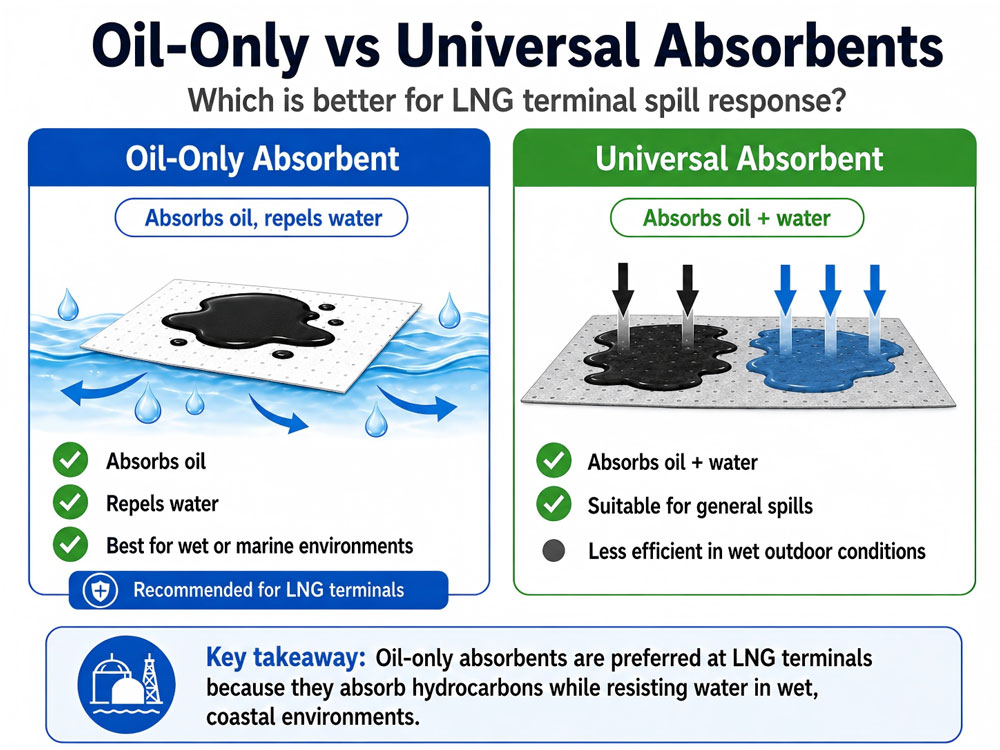
Common oil absorbent products include:
Universal absorbents for mixed liquid spills
Oil-only absorbents are designed to absorb oil while repelling water. This makes them especially useful in wet environments such as ports, marinas, shipyards, LNG terminals, offshore platforms, and coastal construction sites.
Universal absorbents absorb both oil and water-based liquids. They are more suitable for factories, warehouses, workshops, and general industrial spill control where the spilled liquid may not always be oil-based.
Spill kits are ready-to-use emergency response kits designed for quick action when a spill occurs. They usually contain absorbent pads, socks, pillows, gloves, waste bags, and other basic response items.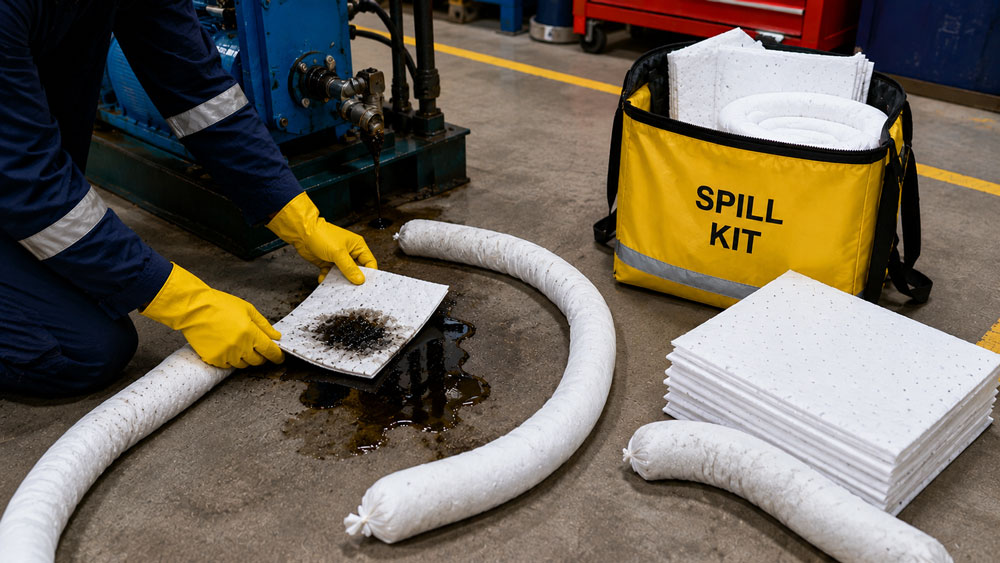
Spill kits are widely used in:
Workshops
Warehouses
Fuel storage areas
Ports and terminals
Construction sites
Vehicles and maintenance areas
Industrial plants
Marine facilities
For small oil leaks, a spill kit is often the first line of response. It allows workers to control the spill quickly before it spreads to drains, soil, water channels, or sensitive working areas.
Different spill kits can be designed for oil-only, universal, or chemical applications depending on the liquid risk at the site.
Oil containment booms are floating barriers used to contain oil spills on water. They are one of the most important pieces of marine oil spill response equipment.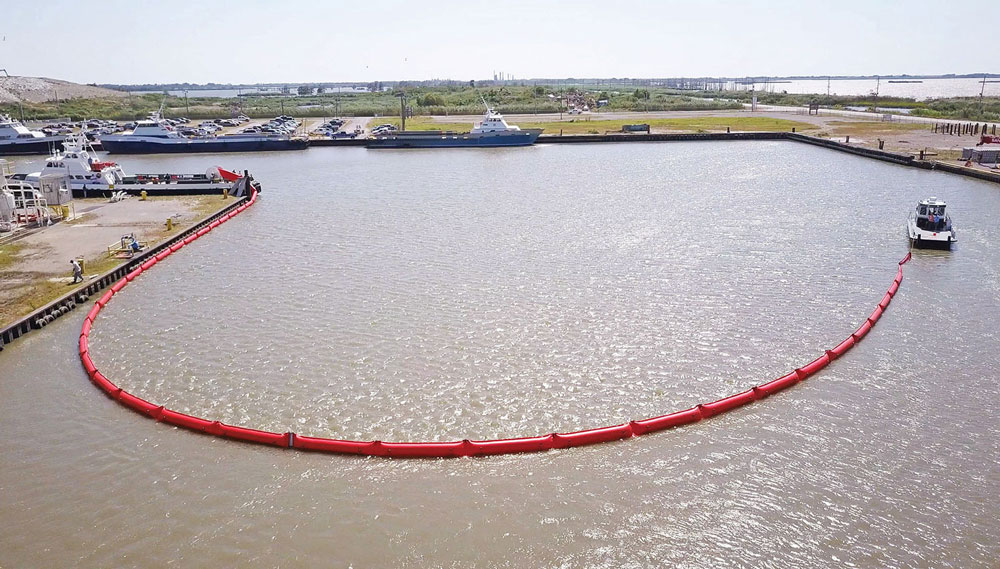
Oil booms are used to:
Contain floating oil
Protect shorelines, ports, and water intakes
Deflect oil away from sensitive areas
Create a recovery zone for skimmers
Support emergency spill response operations
Different water conditions require different boom designs. Calm water, rivers, ports, nearshore areas, offshore waters, and fast-current locations may all require different boom heights, float sizes, skirt depths, tension members, ballast chains, and anchoring systems.
Common oil containment boom types include:
Customized booms for special marine conditions
For calm water or protected ports, lightweight solid float booms may be enough. For stronger currents, waves, tides, or offshore operations, heavier-duty booms with stronger tension members and better buoyancy are usually required.
Oil skimmers are used to recover floating oil from the water surface. After the oil has been contained by booms, skimmers help remove the oil and transfer it into tanks or other temporary storage systems.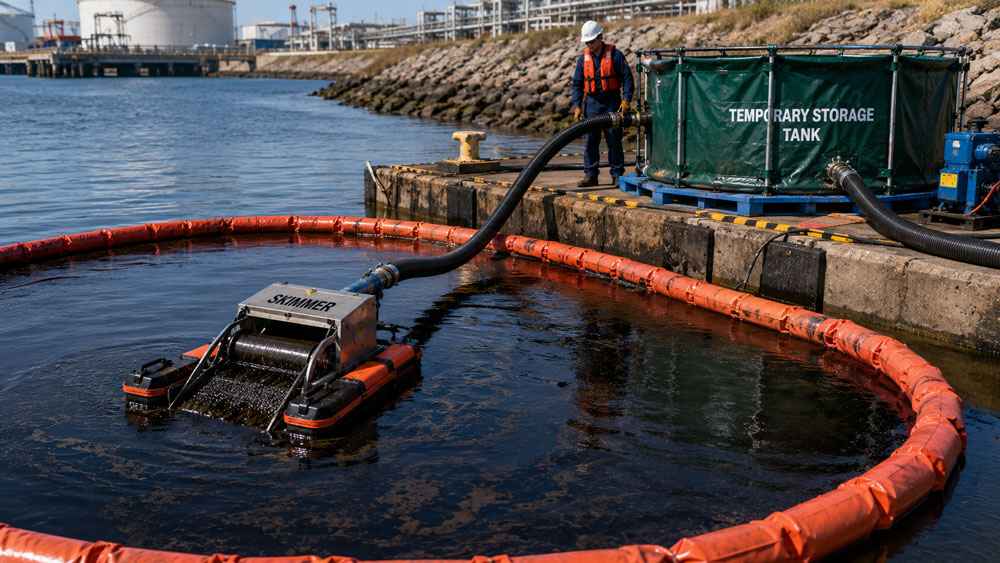
Oil skimmers are commonly used in:
Ports and harbors
Shipyards
Oil terminals
Offshore response operations
Rivers and inland waterways
Industrial wastewater or oily water areas
Different skimmer types may be used depending on the oil viscosity, water condition, recovery rate, and operation method. In many spill response systems, skimmers work together with oil booms, pumps, hydraulic power packs, hoses, and temporary storage tanks.
Once oil or oily water is recovered, it needs to be stored safely before transportation or disposal. Temporary storage tanks are used to hold recovered oil, contaminated water, or other liquids during emergency response operations.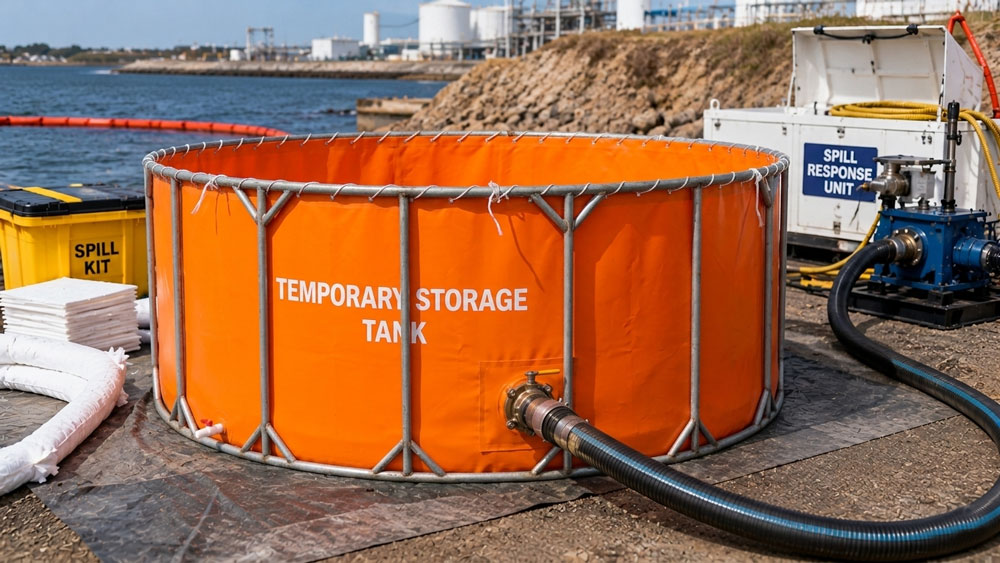
Common temporary storage options include:
Floating storage tanks
Frame-supported storage tanks
Portable onland storage tanks
Pillow tanks
Collapsible tanks
Open-top temporary tanks
Temporary storage tanks are especially important for large spill response projects where recovered oil cannot be immediately transported away.
They are often used together with skimmers, pumps, hoses, and oil containment booms.
Spill containment berms are used for secondary containment on land. They are designed to prevent oil, fuel, chemicals, or contaminated liquids from spreading across the ground.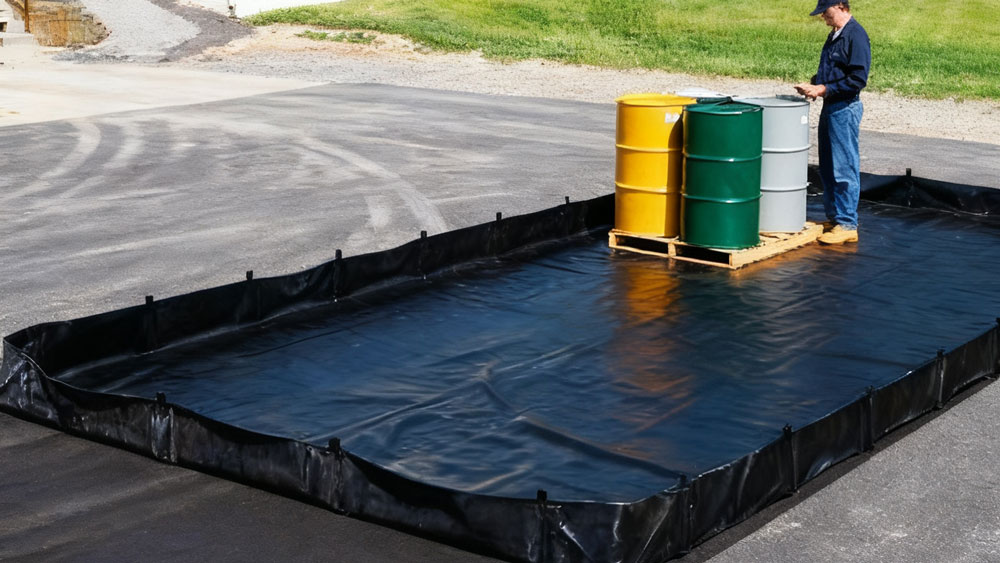
They are commonly used under:
IBC tanks
Oil drums
Fuel tanks
Generators
Maintenance equipment
Trucks and tankers
Temporary storage areas
Construction machinery
Unlike absorbents, spill containment berms are preventive equipment. They are placed before a spill happens to make sure any leak is contained within a controlled area.
Spill berms are especially useful for industrial sites, construction areas, fuel transfer points, maintenance zones, and temporary storage operations.
Marine oil spill response focuses on controlling oil spills on water. This includes spills in ports, harbors, rivers, shipyards, marinas, offshore areas, and coastal construction sites.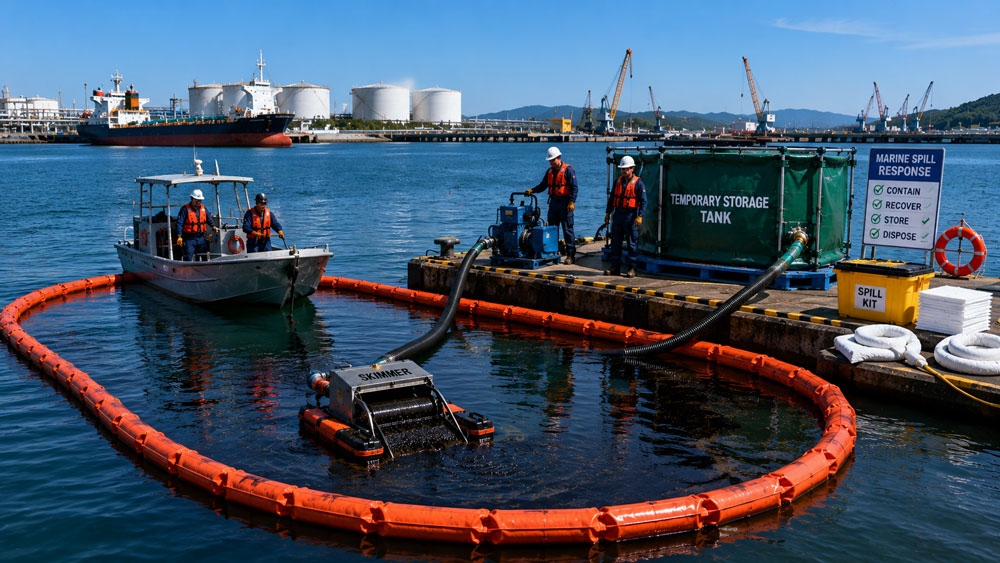
Typical marine spill risks include:
Fuel leakage from vessels
Hydraulic oil leaks from cranes or marine equipment
Diesel spills during temporary fueling
Lubricant spills from machinery
Oil leakage during repair or maintenance
Accidental discharge during marine construction
In marine environments, oil can spread quickly due to wind, waves, current, and tides. Therefore, containment must be fast, stable, and suitable for the water condition.
A typical Marine Oil Spill Response package may include:
Boom reels
Anchor systems
Hydraulic power packs
Transfer pumps
Hoses
Spill kits for dockside response
For ports and terminals, oil booms are often used to surround vessels, protect berthing areas, or create a recovery zone. For shipyards and marine construction sites, both water-based containment and land-based spill kits are usually needed.
Not all oil spills happen on water. Many spills occur on land, inside workshops, around storage areas, near machinery, or during fuel transfer.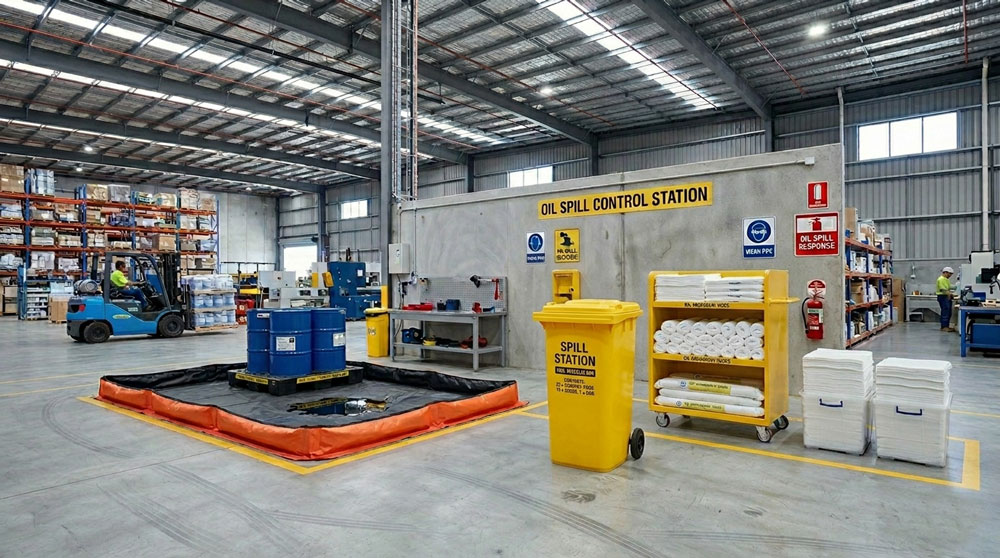
Onshore oil spill risks are common in:
Workshops
Warehouses
Industrial plants
Power plants
Oil storage areas
Fuel stations
Construction sites
Maintenance areas
Logistics yards
Mining and heavy equipment sites
For onshore applications, the response focus is different from marine spill control. Instead of floating containment, the priority is usually to stop oil from spreading across floors, entering drains, contaminating soil, or reaching stormwater systems.
A typical onshore spill response system may include:
Absorbent socks for surrounding leaks
Absorbent pillows for larger puddles
Drain covers
Secondary containment pallets
Waste bags and disposal tools
For factories and warehouses, spill kits should be placed near high-risk areas such as oil drums, machinery, loading docks, fuel storage areas, and maintenance zones. For IBC tanks or drums, secondary containment should be planned before leakage occurs.
LNG itself is not an oil product, but LNG terminals still face oil spill risks. These risks often come from supporting equipment and site operations.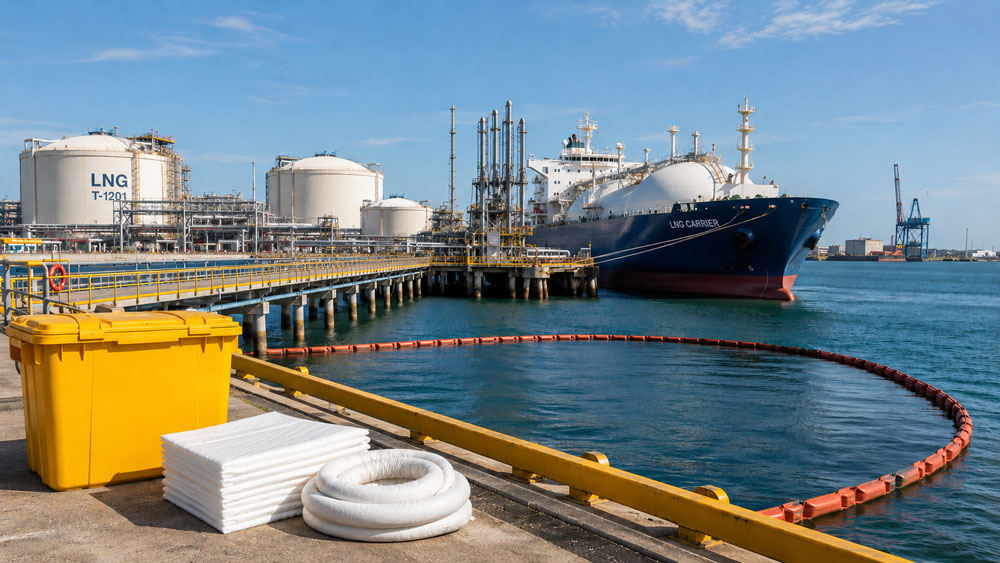
Common spill sources at LNG terminals include:
Diesel generators
Hydraulic equipment
Cranes and pile drivers
Marine fuel
Lubricants
Temporary fueling stations
Construction machinery
Workboats and support vessels
For LNG terminals, oil spill response planning should include both marine and land-based equipment. Oil-only absorbents are often preferred in wet coastal environments because they absorb oil while repelling water.
Ports and shipyards have similar requirements. They usually need oil booms for water-based containment, spill kits for dockside response, and absorbents for daily maintenance spills.
For EPC contractors, HSE managers, and terminal operators, the key is not only to prepare products, but to build a response system suitable for the site’s real risk points.
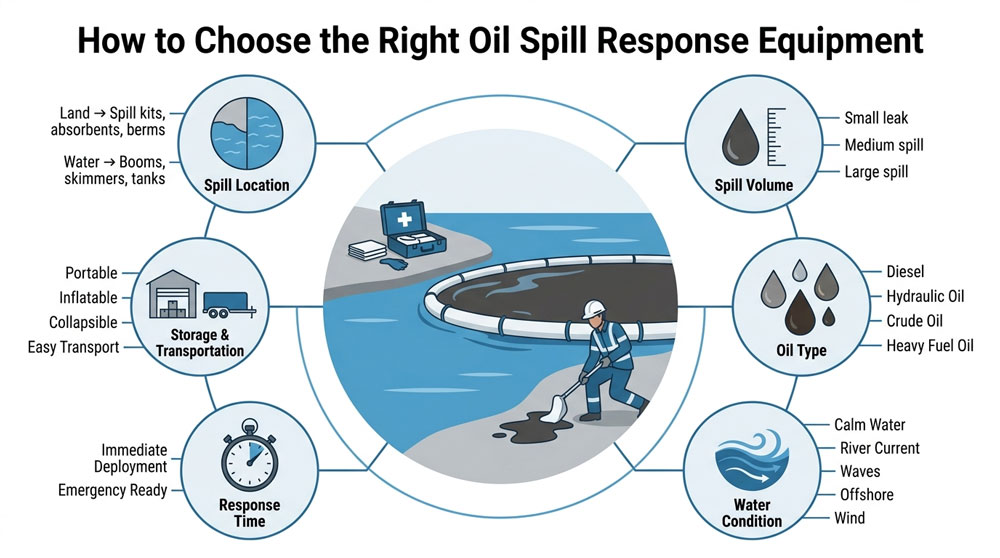
Choosing the right oil spill response equipment depends on the spill risk and site condition. Before selecting products, it is important to consider the following factors.
The first question is whether the spill risk is on land, on water, or both.
For land-based spills, spill kits, absorbents, containment berms, and drain protection are usually the priority. For water-based spills, oil containment booms, skimmers, pumps, and temporary storage tanks become more important.
A small oil leak may only require absorbent pads and socks. A large marine oil spill may require hundreds or thousands of meters of oil boom, skimmers, pumps, storage tanks, boats, and trained response teams.
The larger the possible spill volume, the more important it is to plan containment, recovery, and storage together.
Different oils behave differently. Diesel, hydraulic oil, lubricants, crude oil, and heavy fuel oil may spread, float, or recover differently.
For light oils, fast containment and absorption are important. For heavier oils, stronger recovery equipment and suitable skimmers may be required.
For marine applications, water condition is one of the most important selection factors.
Key conditions include:
Calm water
Tidal movement
River current
Waves
Wind exposure
Nearshore or offshore use
Deployment duration
A boom suitable for calm port water may not be suitable for fast current or exposed coastal areas. Boom size, floatation, skirt depth, fabric strength, connectors, ballast chain, and anchoring design should match the site condition.
Emergency spills require fast deployment. For this reason, many facilities keep spill kits, absorbents, and compact booms ready at high-risk points.
For larger facilities, response equipment may be stored in containers, trailers, emergency response stations, or dedicated warehouses.
Oil spill response equipment should be easy to store, move, and deploy. Products such as inflatable booms, collapsible tanks, spill kits, and portable berms are often selected because they save storage space and can be transported quickly.
The table below gives a simple overview of common spill scenarios and recommended equipment.
| Spill Scenario | Main Risk | Recommended Equipment |
Workshop oil leak | Hydraulic oil, lubricant, diesel | Spill kits, oil absorbent pads, absorbent socks |
Warehouse drum storage | Drum leakage, floor contamination | Spill containment berms, absorbents, containment pallets |
IBC storage area | Secondary containment failure | Spill berms, containment pallets, drain protection |
Port fuel spill | Floating oil on water | Oil containment booms, skimmers, storage tanks |
Shipyard repair area | Oil leaks from vessels and equipment | Oil booms, absorbents, spill kits, drain covers |
LNG terminal construction | Diesel, hydraulic oil, marine fuel | Oil-only absorbents, spill kits, oil booms, berms |
River or fast-current site | Oil spreading with current | Heavy-duty booms, anchoring systems, skimmers |
Offshore or nearshore response | Waves, wind, larger spill risk | Inflatable rubber booms, skimmers, pumps, storage tanks |
Fuel transfer operation | Hose leakage or overflow | Spill kits, containment berms, absorbents |
Emergency response contractor | Multiple spill scenarios | Complete response package with booms, skimmers, tanks, and absorbents |
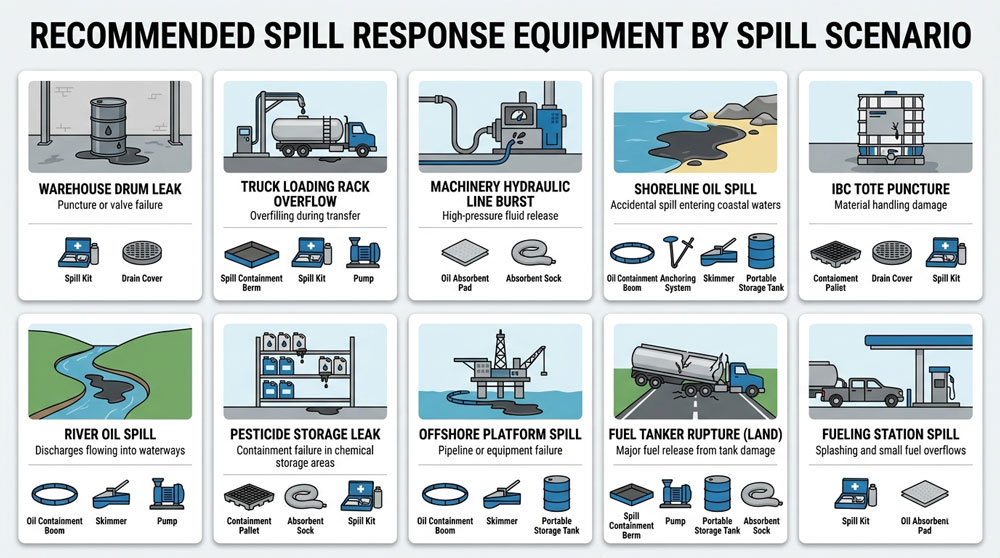
A well-prepared spill response system should not rely on only one product. It should combine different equipment according to the site’s risk.
For example:
A workshop may need spill kits, absorbent pads, absorbent socks, and waste bags.
A fuel storage area may need spill berms, containment pallets, and drain covers.
A port may need oil booms, skimmers, storage tanks, and dockside spill kits.
An LNG terminal may need both oil-only absorbents and marine oil containment equipment.
A spill response company may need a full range of equipment for different emergency scenarios.
The most effective spill response plans are designed before a spill happens. This allows workers to respond faster, reduce environmental damage, protect facilities, and improve site safety.
Oil spill response equipment must be selected according to real site conditions. Product size, fabric strength, buoyancy, skirt depth, connector type, anchoring method, storage method, and deployment plan can all affect performance.
An experienced manufacturer can help customers choose suitable products based on:
Spill location
Water condition
Oil type
Project scale
Deployment method
Storage requirements
Budget
Documentation requirements
Long-term maintenance needs
For international projects, product documentation, packing, shipping, and customization are also important. Ports, terminals, contractors, and industrial companies often need clear technical specifications, drawings, packing information, and supporting documents for procurement and project approval.
JXY provides oil spill response equipment for marine, port, industrial, and environmental protection applications. Our product range includes oil containment booms, oil absorbents, spill kits, skimmers, temporary storage tanks, spill containment berms, and related emergency response equipment.
Whether your project is located at a port, LNG terminal, shipyard, industrial plant, warehouse, oil storage area, or emergency response base, we can help you build a practical spill control solution based on your actual site conditions.
Oil spill response is not a single product. It is a complete system that includes prevention, containment, recovery, storage, and final cleanup.
For small spills, absorbents and spill kits can provide fast first response. For marine spills, oil containment booms and skimmers are essential for controlling and recovering floating oil. For industrial and onshore applications, spill containment berms and secondary containment systems help prevent leaks from spreading before they become larger incidents.
The right oil spill response equipment depends on where the spill may happen, what liquid may be spilled, how much oil may be released, how fast the response must be, and what site conditions exist.
By selecting the right combination of absorbents, spill kits, oil booms, skimmers, storage tanks, and containment berms, facilities can improve spill preparedness, reduce environmental risk, and respond more effectively when accidents happen.
Need help choosing oil spill response equipment for your project? Contact JXY with your spill location, oil type, water condition, and estimated spill volume. Our team will help recommend a suitable solution for your site.


