

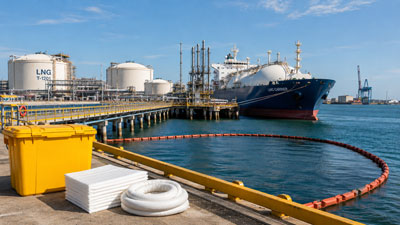
 LNG terminals are often seen as clean energy infrastructure because liquefied natural gas itself is not crude oil. However, this does not mean LNG terminal projects are free from oil spill risks.
During construction, commissioning, daily operation, and maintenance, LNG terminals usually involve many supporting oil-based systems, including diesel fuel, hydraulic oil, lubricants, gear oil, transformer oil, vehicle fuel, and marine fuel from vessels. These oils may come from cranes, generators, pumps, trucks, forklifts, dredgers, tugboats, barges, loading equipment, and maintenance workshops.
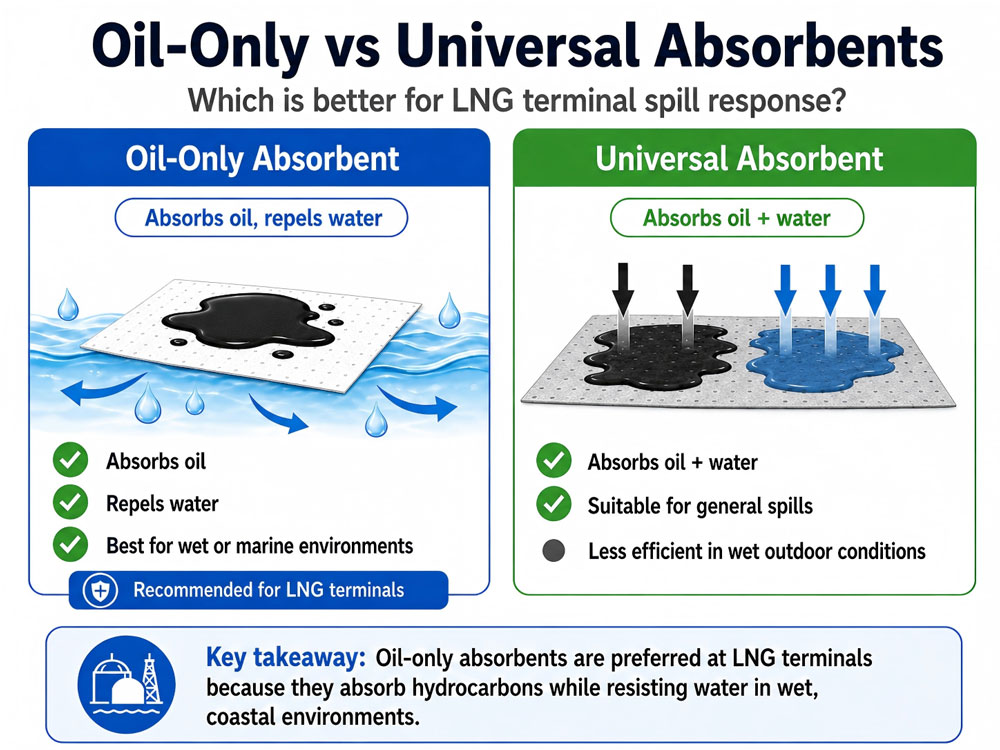
For this reason, oil spill response equipment is still an important part of LNG terminal environmental protection. Among the different types of absorbents, oil-only absorbents are usually preferred because they are designed to absorb oil and hydrocarbons while repelling water.
A common misunderstanding is that because LNG is a gas product, oil absorbents are not needed at LNG terminals. In reality, oil-only absorbents are not used to absorb LNG itself.
LNG is a cryogenic liquid and requires a completely different emergency response procedure. Oil-only absorbents are used for the oil-based materials and hydrocarbon liquids around the LNG terminal, such as:
Diesel fuel from construction machinery and generators
Hydraulic oil from cranes, lifting equipment, and marine machinery
Lubricating oil from pumps, winches, engines, and gearboxes
Fuel or bilge-related oil from workboats, tugboats, and barges
Oil leaks around maintenance workshops and storage areas
Small spills near loading areas, drainage channels, and stormwater outlets
These are the practical spill risks that terminal operators, EPC contractors, and emergency response teams need to control quickly before they spread into the sea, drainage system, or sensitive coastal environment.
Oil-only absorbents are absorbent materials designed specifically for oils and hydrocarbons. Most oil-only absorbents are made from hydrophobic materials such as polypropylene.
“Hydrophobic” means water-repelling. “Oleophilic” means oil-attracting.
This combination allows oil-only absorbents to float on water and absorb oil from the surface without becoming saturated by seawater or rainwater. This is why they are widely used in ports, offshore facilities, marinas, shipyards, oil terminals, and LNG terminal projects.
Common oil-only absorbent products include:
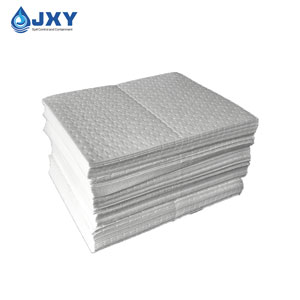
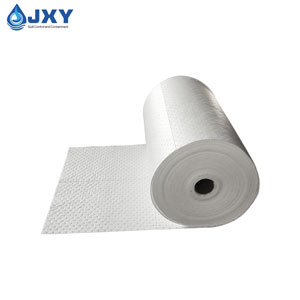

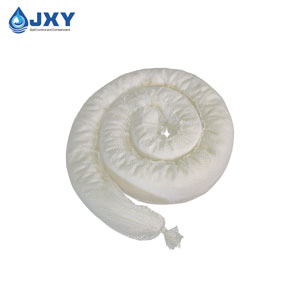
Universal absorbents are useful in workshops and factories because they can absorb many types of liquids, including water, coolant, oil, and some non-aggressive chemicals. However, LNG terminals are usually wet, coastal, and exposed to rain, seawater, humidity, and outdoor working conditions.
In these environments, universal absorbents may quickly absorb water before they can absorb enough oil. This reduces efficiency and creates more contaminated waste.
Oil-only absorbents are preferred because they offer several important advantages.
1. They Repel Water and Absorb Oil Selectively
LNG terminals are commonly located near shorelines, ports, jetties, and marine loading areas. Oil spills may occur on wet concrete, inside drainage channels, around stormwater outlets, or directly on the water surface.
In these conditions, oil-only absorbents help response teams focus on recovering the oil instead of absorbing unnecessary water.
For example, if diesel or hydraulic oil leaks into a drainage channel after rainfall, an oil-only absorbent boom can be placed across the channel to intercept floating oil. Oil-only pads can then be used inside the contained area to absorb the sheen.
This selective absorption makes the response faster, cleaner, and more efficient.
2. They Perform Better in Marine and Outdoor Areas
Many LNG terminal spill risks are located outdoors. Examples include:
Jetty and berth areas
Temporary fuel storage areas
Marine construction zones
Equipment parking areas
Rainwater drainage channels
Shoreline maintenance areas
Workboat and tugboat operation zones
Because these areas are exposed to seawater and rain, spill response materials must remain effective even in wet conditions.
Oil-only absorbent pads and booms are suitable for these areas because they float on water and continue absorbing oil from the surface. This makes them especially useful for small oil sheens, diesel spills, hydraulic oil leaks, and minor fuel contamination near the waterline.
3. They Reduce Waste Disposal Volume
Waste disposal is a serious concern for LNG terminal operators and EPC contractors. Once absorbents are saturated with oil, they must be collected, stored, transported, and disposed of according to local regulations.
If a universal absorbent absorbs too much water, the total waste volume becomes higher. This increases handling work, storage requirements, and disposal cost.
Oil-only absorbents reduce unnecessary water absorption, so the waste collected is more focused on oil contamination. This helps reduce the volume of saturated waste and supports a cleaner, more controlled spill response process.
4. They Are Suitable for First Response and Emergency Spill Kits
At LNG terminals, spill response needs to be fast. A small oil leak can spread quickly on wet surfaces or water, especially around drainage systems and marine areas.
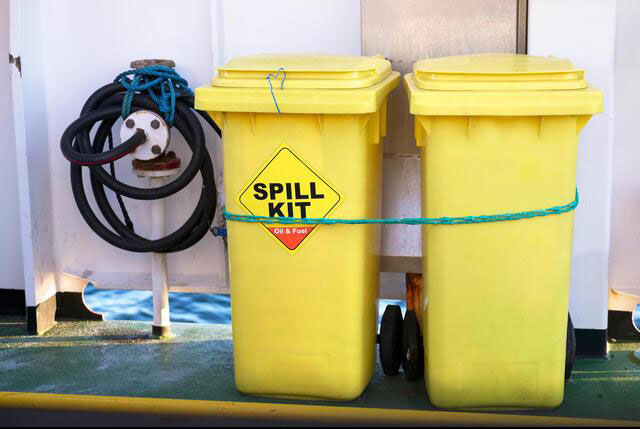
Oil-only absorbents are easy to store, transport, and deploy. They can be packed into mobile spill kits, emergency response stations, maintenance vehicles, and marine response containers.
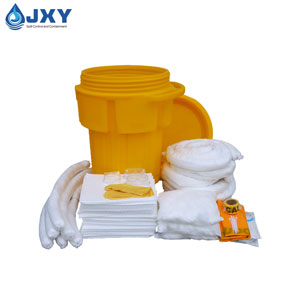
A typical LNG terminal oil spill kit may include:
Oil-resistant gloves
Safety goggles
Disposal bags
Drain covers
Temporary warning signs
Instructions for first response
For larger marine areas, oil-only absorbent booms can also be used together with containment booms, skimmers, temporary storage tanks, and other oil spill response equipment.
5. They Help Control Oil Sheen Before It Spreads
One of the most common spill issues at LNG terminals is not always a large oil spill. In many cases, the problem starts as a small oil sheen.
Oil sheen may appear around:
Workboats and tugboats
Floating equipment
Temporary fueling points
Hydraulic machinery
Pump areas
Rainwater discharge points
Maintenance zones
If not controlled early, the oil sheen may spread across the water surface and become more difficult to collect.
Oil-only absorbent booms are useful because they can be deployed quickly to surround or intercept floating oil. Oil-only pads can then be placed inside the containment area to absorb the remaining oil film.
This is a practical and cost-effective way to handle small to medium hydrocarbon spills before they become larger environmental problems.
The answer depends on the spill risk.
For oil, diesel, hydraulic oil, lubricants, marine fuel, and hydrocarbon-based liquids, oil-only absorbents are usually the better choice, especially in outdoor, wet, marine, or rainy environments.
For indoor workshops where water-based liquids, coolants, and non-aggressive general liquids may also be present, universal absorbents may still be useful.
For chemical spills, LNG terminals should use chemical absorbents or dedicated chemical spill kits based on the specific chemical properties and safety data sheet.
In most LNG terminal spill response plans, the best solution is not to use only one type of absorbent. A more complete approach is to prepare different spill response materials for different risk zones:
Oil-only absorbents for marine and hydrocarbon spill areas
Universal absorbents for general workshop maintenance areas
Chemical absorbents for chemical storage and handling areas
Containment booms for water surface oil control
Drain covers for stormwater protection
Temporary storage containers for contaminated waste
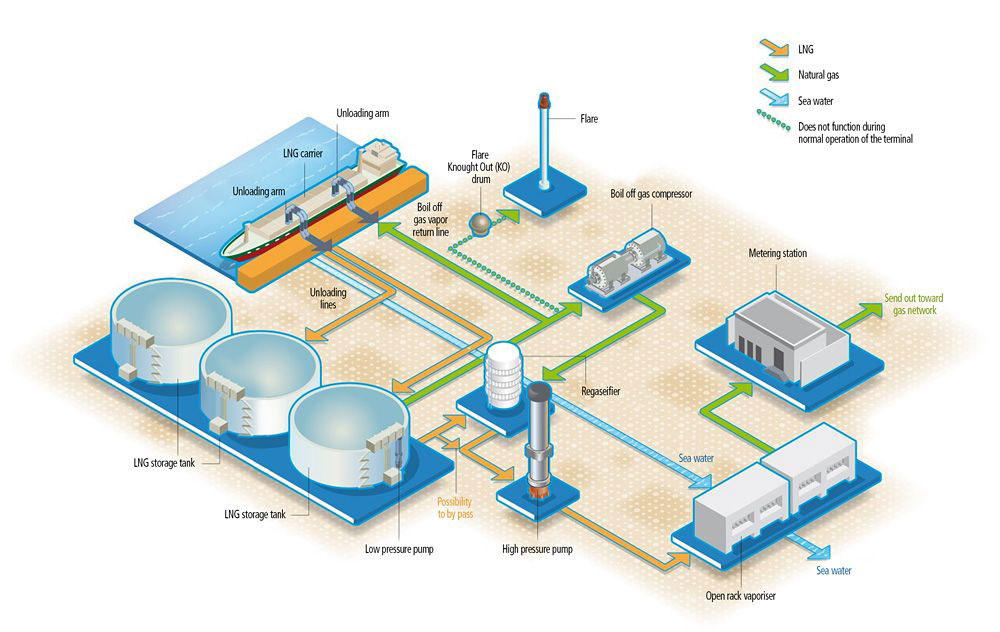
For LNG terminal projects, we usually recommend preparing oil-only absorbents according to the actual site layout, spill risk level, and response distance.
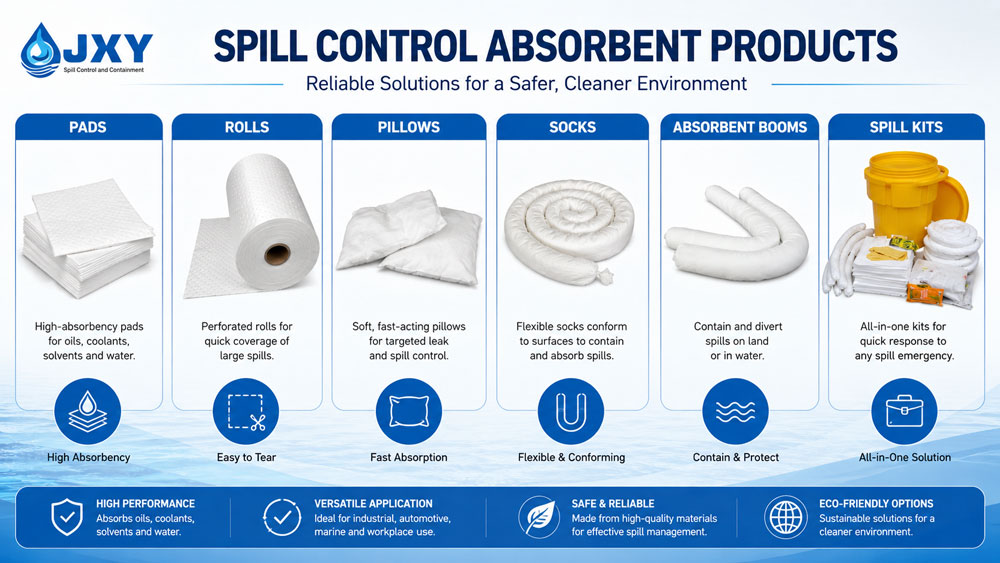
Oil-only pads are suitable for small leaks, oil drips, machinery maintenance, and surface oil cleanup. They are easy to use and can be stored in spill kits or emergency response cabinets.
Oil-only rolls are suitable for larger surface areas, maintenance workshops, and long working zones. They can be cut to the required length and placed under machinery or near high-risk areas.
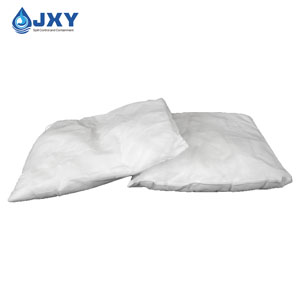
Oil-only pillows are useful for absorbing larger volumes of oil in localized areas, such as under leaking valves, pumps, drums, or equipment.
Oil-only socks can be placed around machinery, along doorways, near drains, or around small leaks to prevent oil from spreading.
Oil-only booms are recommended for marine areas, drainage outlets, stormwater channels, docks, and floating oil control. They can float on water and help absorb oil sheen from the surface.
Oil-only spill kits are suitable for quick response at LNG terminal workshops, warehouses, fueling zones, maintenance areas, and marine loading areas. They can be supplied in bags, wheeled bins, or larger emergency response containers.
To improve response speed, oil-only absorbents should not be stored only in one central warehouse. They should be placed close to high-risk areas.
Recommended locations include:
Near diesel generators
Near hydraulic power units
Near cranes and heavy equipment
Near temporary fueling points
Around maintenance workshops
Near berth and jetty access points
Near drainage channels and stormwater outlets
Inside marine response containers
On workboats or emergency response vessels
The goal is simple: when a spill happens, the response team should be able to access the absorbents immediately.
Oil-only absorbents are preferred at LNG terminals because they match the real spill risks found in these facilities.
Although LNG itself is not an oil, LNG terminals still use many oil-based materials during construction, operation, and maintenance. Diesel, hydraulic oil, lubricants, and marine fuel can all create environmental risks if they reach the sea, drainage system, or shoreline.
Compared with universal absorbents, oil-only absorbents are more suitable for LNG terminal environments because they repel water, absorb hydrocarbons selectively, float on water, reduce unnecessary waste, and support faster first response.
For LNG terminal operators, EPC contractors, and marine emergency response teams, oil-only absorbents are not just simple consumables. They are an important part of a practical oil spill response system.


