

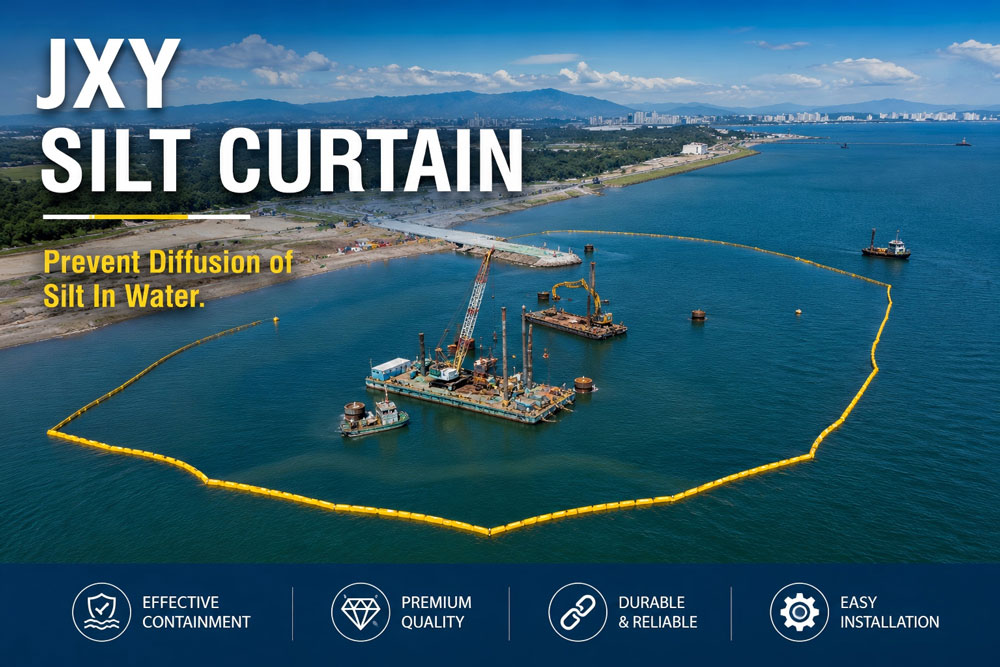
Dredging is an essential activity in ports, harbors, rivers, lakes, marinas, and coastal engineering projects. It is commonly used to deepen navigation channels, remove accumulated sediment, support land reclamation, maintain berthing areas, or prepare underwater construction sites.
However, dredging also disturbs the seabed or riverbed. Once sediment is lifted, excavated, or moved, fine particles can become suspended in the water and spread with currents, waves, or vessel movement. This creates what is commonly known as a sediment plume or turbidity plume.
That is why silt curtains, also known as turbidity curtains, are widely used in dredging projects. They act as floating sediment control barriers, helping to contain suspended solids within a defined working area and reduce the impact on surrounding waters.
A silt curtain is a floating barrier designed to control the movement of suspended sediment in water. It usually consists of:
Floating elements at the top to keep the curtain on the water surface
A vertical skirt made from PVC fabric, geotextile, or permeable filter fabric
A bottom ballast chain or weight to keep the skirt hanging downward
Connectors between sections
Mooring or anchoring systems to keep the curtain in position
Depending on the project conditions, silt curtains can be designed as impermeable curtains or permeable turbidity curtains.
An impermeable silt curtain uses a solid PVC-coated fabric skirt to block sediment movement more directly. A permeable turbidity curtain uses geotextile filter fabric, allowing water to pass through while filtering suspended particles. The suitable type depends on water depth, current speed, wave exposure, sediment type, and project requirements.
The most direct reason for using a silt curtain in dredging is to control sediment plume movement.
During dredging, fine particles such as silt, clay, organic material, or contaminated sediment may become suspended in the water column. Without containment, these particles can drift away from the dredging area and spread over a much larger zone.
A properly installed silt curtain helps keep suspended sediment closer to the work zone, allowing particles more time to settle before they move into surrounding waters.
This is especially important in projects near:
Ports and terminals
Marinas
Coastal resorts
Coral reefs
Aquaculture areas
Wetlands
Water intake zones
Environmentally sensitive habitats
Turbidity refers to how cloudy or murky water becomes due to suspended particles. High turbidity can reduce light penetration, affect photosynthesis, and disturb aquatic ecosystems.
In dredging projects, turbidity is often one of the key environmental indicators monitored by project owners, contractors, or local authorities.
A turbidity curtain helps reduce the spread of cloudy water by creating a controlled boundary around the dredging zone. While it cannot make dredging completely sediment-free, it can significantly reduce uncontrolled sediment dispersion when properly selected, installed, and maintained.
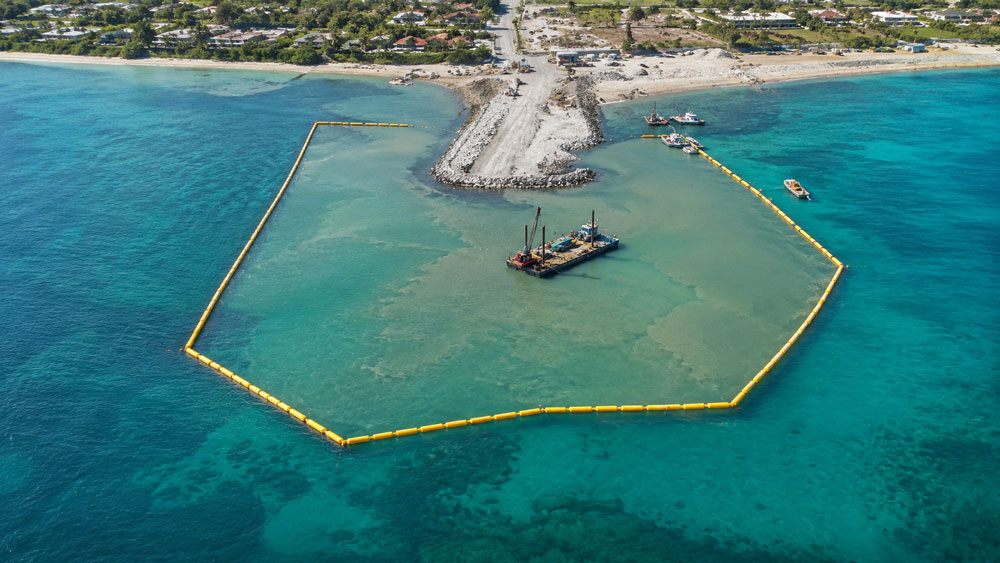
Suspended sediment may affect aquatic life in several ways. Fine particles can settle on plants, shellfish beds, coral reefs, fish spawning areas, or benthic habitats. Reduced water clarity may also affect sunlight penetration, which is important for seagrass and other underwater vegetation.
For dredging projects near sensitive environments, silt curtains are often used as part of an environmental protection plan.
They help reduce the risk of sediment spreading into areas where it may harm:
Coral communities
Seagrass beds
Fish habitats
Shellfish farms
Mangroves
Wetlands
Protected water bodies
This is one reason why silt curtains are commonly required in coastal dredging, environmental dredging, marina construction, and restoration projects.
Many dredging projects must follow environmental regulations, permit conditions, or turbidity limits. Project owners may be required to prevent sediment from spreading beyond the approved work area.
Silt curtains can help contractors meet these requirements by providing a visible and functional sediment control boundary.
In some projects, turbidity is monitored both inside and outside the curtain. If turbidity levels exceed the allowed limit, dredging operations may need to be slowed, adjusted, or temporarily stopped.
Using a suitable silt curtain from the beginning can help reduce the risk of delays, complaints, penalties, or additional environmental control costs.
Besides sediment control, silt curtains also help define the dredging work area. This is useful for project management, safety, and site organization.
The floating curtain line visually separates the active dredging zone from the surrounding water. This can help nearby vessels, workers, inspectors, and site managers understand where dredging activity is taking place.
In port, harbor, or marina projects, the floating line can also help prevent unnecessary disturbance to adjacent areas.
Choosing the right silt curtain is important because different water conditions require different designs.
For lakes, ponds, marinas, sheltered ports, and slow-current areas, a standard silt curtain with PVC-coated fabric skirt may be suitable. These projects usually have lower wave and current forces, so the curtain can focus mainly on sediment containment.
For rivers, channels, and semi-sheltered coastal waters, the curtain may need stronger components. This can include reinforced fabric, galvanized or stainless-steel tension cables, heavier ballast chains, and a more secure anchoring system.
In some cases, a permeable geotextile skirt may be preferred to reduce water pressure while still filtering suspended sediment.
For long deployment periods, deep water, strong currents, or environmentally sensitive dredging projects, a heavy-duty turbidity curtain is usually recommended. The design may include high-strength fabric, reinforced stress points, stronger connectors, customized section lengths, and a project-specific mooring arrangement.
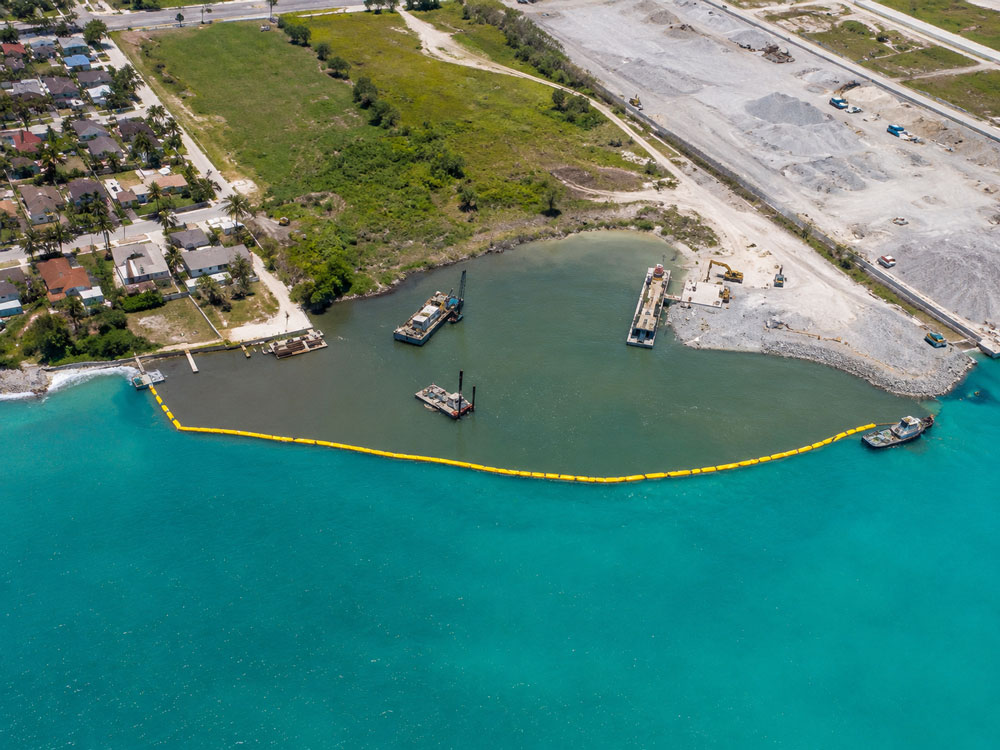
Silt curtains are widely used in many dredging-related projects, including:
Port and harbor dredging
Marina maintenance dredging
River and canal dredging
Lake and reservoir sediment removal
Land reclamation projects
Bridge and pier construction
Coastal protection works
Environmental remediation dredging
Intake and outfall construction
Wetland restoration projects
In all these applications, the main purpose is the same: to reduce the uncontrolled spread of suspended sediment and support safer, cleaner, and more compliant dredging operations.
Silt curtains are needed in dredging projects because they help control sediment plumes, reduce turbidity, protect aquatic environments, support environmental compliance, and create a clear working boundary.
For contractors and project owners, choosing the right dredging silt curtain can reduce environmental risks and help the project proceed more smoothly.
However, every dredging site is different. Water depth, current speed, wave exposure, sediment type, deployment duration, and environmental requirements should all be considered before selecting the final curtain design.
A properly designed silt curtain system is not just a product. It is an important part of responsible dredging and marine environmental protection.
Need a silt curtain for your dredging project? Share your water depth, current condition, curtain length, and deployment duration with us, and we can recommend a suitable curtain design for your project.


