In the world of oil spill management, we talk about the "Golden Hour." This is the critical first 60 minutes after a leak is detected. In a busy harbor or a crowded marina, what you do in these 60 minutes determines whether you have a minor cleanup or a multi-million dollar environmental disaster.
For authorities managing port and marina first response, the challenge isn't just having equipment—it's having equipment that can be deployed before the oil spreads under docks, into engine intakes, or out to sea. This is precisely why the PVC Fence Boom has become the global gold standard for emergency teams.
When an alarm sounds at a terminal, you don't have time to wait for air compressors or heavy cranes. Rapid deployment oil booms are essential.
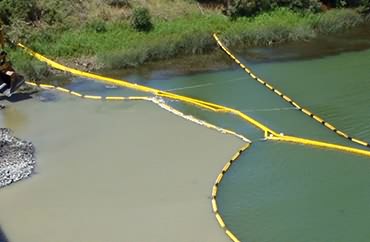
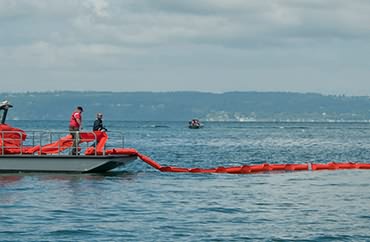
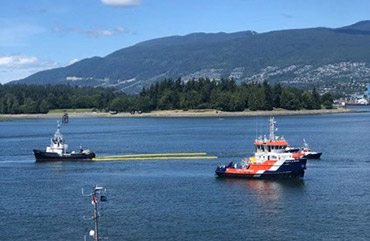
Unlike inflatable booms that require power and setup time, Fence Booms are "ready-to-go." Because the buoyancy is provided by internal flat foam floats, responders can simply pull the boom from its storage crate and tow it into position. A small team of two people can deploy 200 meters of fence boom in under 10 minutes, making it the most efficient tool for the "Golden Hour."
Related Resource: To see how this rapid deployment saves costs in complex logistics, read our guide on [PVC Fence Booms for Rapid Deployment: Compact Oil Spill Solutions for Emergency Response in LATAM].
Space is at a premium in ports and marinas. You cannot afford to have massive reels of solid-float booms blocking access roads.
Fence Booms provide compact oil containment solutions. Thanks to their accordion-fold design, they can be stored in small, stackable aluminum or fiberglass crates right on the jetty or near high-risk fueling docks. This proximity allows port authorities to react instantly rather than waiting for equipment to be trucked in from a distant warehouse.
Spill response for crowded marinas requires surgical precision. Traditional round-float booms can be bulky and difficult to maneuver between tightly packed yachts and finger piers.
The slim, vertical profile of a Fence Boom allows it to be threaded through narrow gaps easily. If you are debating between different designs, it is important to understand the structural trade-offs.
Expert Comparison: Check out our detailed analysis: [Fence Boom vs. Solid Float Boom: Which Oil Containment Solution is Right for You?] to see why the flat-float design wins in narrow spaces.
In a busy port, a spill isn't just an environmental risk; it's an operational bottleneck. You need to clean up and get back to business.
Because Fence Booms have a flat surface, they are significantly easier to decontaminate than cylindrical booms. Responders can pressure-wash the oil off the flat PVC fabric quickly, fold it back into its "accordion" state, and have it ready for the next emergency. This efficiency is a core part of maintaining HSE compliance for marine terminals.
Don't wait for an incident to find out your equipment is too slow. As an integrated solution provider since 2004, we help port authorities and marina managers design the perfect first-response package.
[Contact our technical team today] for a customized quote on rapid deployment oil booms and ensure your facility is ready for the "Golden Hour."