

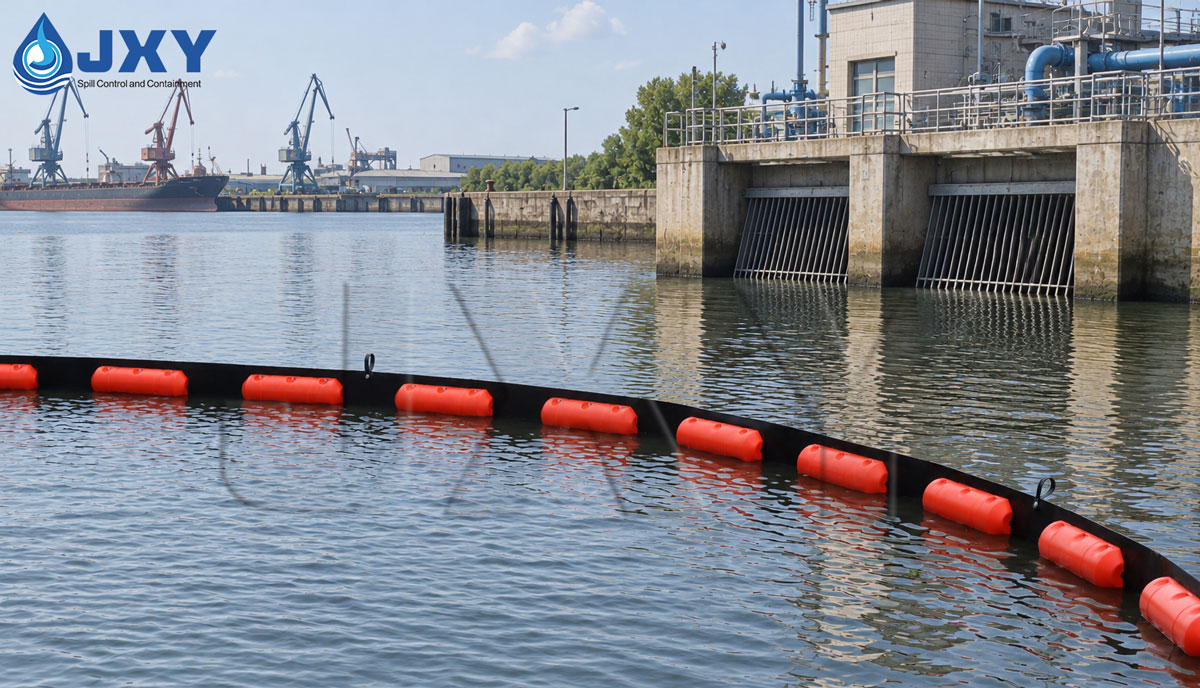
Floating plastic bottles, packaging, vegetation, branches and timber can create much more than an appearance problem.
At ports, floating debris can collect around berths, vessels and marina areas. In rivers, waste can travel downstream and eventually reach coastal waters. At water intakes, accumulated debris can obstruct screens, interfere with water flow and create additional maintenance requirements.
A floating trash boom provides a way to intercept, contain or redirect this material before it reaches a more difficult or costly location.
But a trash boom designed for a calm harbor should not automatically be installed across a fast-flowing river. A barrier intended to catch plastic bottles may also be completely different from one expected to stop branches, timber or heavy vegetation.
For JXY, the starting point is therefore not simply the required boom length. It is understanding what the barrier needs to stop and where it will operate.
A floating trash boom creates a controlled barrier at or near the water surface. Floating material is intercepted by the boom and either retained in a collection area or guided toward a location where it can be removed.
That sounds simple, but the forces acting on a debris barrier can become significant.
Water continues moving. Wind pushes surface debris. Rainfall can suddenly increase river flow. Vegetation and branches accumulate against the barrier. As the debris load increases, so does the force transferred to the boom, tension members and anchoring system.
For this reason, a successful trash boom project needs to consider flotation, freeboard, underwater skirt or mesh, tensile strength, connectors and anchors as one complete system.
JXY manufactures a range of Trash and Debris Boom systems for different applications, including PVC barriers, permanent heavy-duty barriers, metal systems, HDPE floats with steel netting and flow-through debris control designs.
Ports typically face a mixture of floating litter and natural debris.
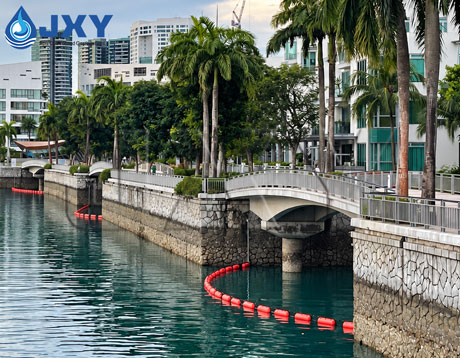 Plastic bottles, bags, packaging, ropes, leaves and small pieces of timber can accumulate in corners of the harbor, around floating docks or near quay walls. Vessel movement and wind can continuously redistribute this material.
A floating debris boom can be installed to prevent waste from entering sensitive areas or to guide it toward a designated collection point.
In relatively sheltered port waters, PVC or foam-supported boom systems can provide a practical solution. The barrier can combine a visible freeboard above the water with an underwater section that helps prevent smaller floating debris from passing beneath it.
For heavier debris loads, long-term installations or more exposed locations, a stronger permanent or semi-permanent system may be more appropriate.
The right design depends on the port environment rather than simply choosing the heaviest boom available.
A marina collecting light plastic waste does not necessarily require the same construction as a commercial port exposed to floating timber and continuous vessel traffic.
If you are comparing possible configurations, our article 5 Things to Consider Before Buying a Trash Boom explains how debris type, current, deployment environment and maintenance affect the final selection.
Rivers create a very different engineering challenge.
Unlike a sheltered basin, the water is continuously moving through the barrier location. Seasonal rainfall can also increase current velocity, water level and debris volume within a short period.
This means the barrier should not unnecessarily block water flow.
A deep impermeable skirt across a fast river can create high hydraulic loading. In these environments, a flow-through configuration using mesh, netting or an appropriate open structure may allow water to pass through while still intercepting floating plastics, vegetation and other debris.
Installation angle also matters.
Placing a trash boom directly at 90 degrees to a strong current may increase loading and cause debris to accumulate across the entire span. In many projects, an angled installation can guide floating material toward one bank or a designated collection area.
This makes debris removal easier and can reduce concentrated loading on the system.
For high-flow applications, JXY can adjust flotation, tension members, mesh configuration and anchoring arrangements according to the river conditions.
Our article on River Trash Containment Booms for Plastic Pollution looks more closely at flow-through barriers for rivers exposed to plastics, vegetation and seasonal changes.
Water intakes are one of the most important applications for floating debris barriers.
Hydroelectric plants, industrial facilities, cooling-water systems, reservoirs and municipal water infrastructure may all depend on a relatively clear intake area.
Floating branches, vegetation, plastic and other debris can accumulate against intake screens. Even when the screen prevents material from entering the system, continuous accumulation can reduce water flow and increase cleaning requirements.
A floating trash boom creates an earlier line of defense.
Instead of allowing all debris to reach the intake screen, the barrier can intercept or redirect floating material farther upstream.
The boom may be installed in a V-shaped, angled or other project-specific configuration so debris moves toward an accessible collection point rather than directly toward critical infrastructure.
For this application, reliability is especially important. The boom may remain deployed continuously and must withstand not only the water conditions but also repeated debris loading.
JXY's trash boom range includes heavy-duty and permanent configurations intended for applications such as power plants, rivers, dams and water intakes.
“Floating trash” can describe very different materials.
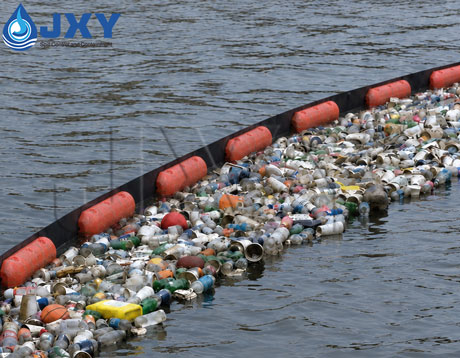
Light plastic bottles and packaging produce relatively little individual impact. Leaves and aquatic vegetation can form dense mats. Branches and timber can strike the barrier with significantly greater force.
The boom configuration should reflect the material expected at the site.
For light floating litter, a flexible PVC barrier may be sufficient in suitable conditions. Where larger branches or timber are common, stronger flotation and structural components may be necessary.
JXY also manufactures HDPE trash barriers with steel netting and metal debris boom systems for applications where higher durability or impact resistance is required.
The underwater component should also match the target debris.
A relatively shallow skirt may be sufficient for material floating mainly on the surface. If smaller objects or partially submerged vegetation need to be captured, deeper mesh or netting may be required.
However, increasing underwater depth also increases loading, particularly in moving water. The best design therefore balances debris interception with hydraulic resistance.
 Anchoring Is Part of the System, Not an Accessory
A strong boom with weak anchoring is not a strong trash control system.
Anchors, ropes, chains, buoys and connection points transfer the forces created by water flow, wind and accumulated debris.
The required arrangement depends heavily on the site.
A sheltered marina may use relatively straightforward fixing points. A river installation may require a more substantial anchoring system capable of handling changing current and water levels. A water intake barrier may need permanent anchoring designed around long-term operation.
The installation layout should also consider where the collected waste will go.
A trash boom should not simply trap debris in the middle of a river where it becomes difficult to remove. Wherever possible, the system should guide the material toward a bank, platform or collection zone accessible to maintenance workers or equipment.
This is one reason JXY encourages customers to provide site drawings, photos or even a simple sketch when requesting a proposal.
Deployment period also affects the design.
Some trash booms are required only during a construction project, rainy season or temporary pollution-control program. Others may remain installed for years around a power plant, reservoir or urban waterway.
Temporary systems usually place greater emphasis on easy installation, removal and storage.
Permanent systems place more emphasis on UV resistance, structural durability, long-term flotation, abrasion resistance and maintainability.
JXY offers both semi-permanent and permanent debris boom configurations, allowing the system to be selected around the actual service requirement rather than treating every project as temporary.
Catching the debris is only half of the solution.
Once plastic, leaves, vegetation and timber accumulate against the barrier, they must be removed.
If maintenance is delayed, the debris load continues increasing and places additional stress on the boom and anchors.
For small marina installations, manual collection from a dock may be sufficient. River projects may guide debris toward an accessible bank. Larger facilities may use boats, grabs, cranes or other mechanical collection methods.
The boom layout should therefore support the cleanup method.
This is especially important for long-term systems. A boom that successfully catches debris but makes removal extremely difficult can create a new operational problem.
For a broader introduction to the environmental and operational value of these barriers, see What Are the Benefits of Using Floating Trash Booms?.
The main difference between a successful trash boom and a poor installation is often not the product quality alone. It is whether the system was designed around the real site.
A port may need a flexible debris barrier that is easy to maintain.
A river may require a flow-through design capable of handling continuous current and seasonal debris loads.
A water intake may need a robust permanent system that redirects debris before it reaches critical infrastructure.
These are three different applications, even though all three may be described simply as “trash boom projects.”
JXY has manufactured floating containment and marine environmental protection systems since 2004. Our trash and debris boom range includes PVC/PU barriers, heavy-duty permanent and semi-permanent designs, HDPE floating systems, metal barriers, mesh configurations and customized anchoring arrangements.
If you are planning a floating debris control project, send us the required barrier length, installation location, main debris type, approximate current speed, water depth, deployment period and any available site photos or drawings.
JXY can evaluate the application and recommend a practical boom structure, flotation, skirt or mesh configuration and anchoring concept for your project.


