

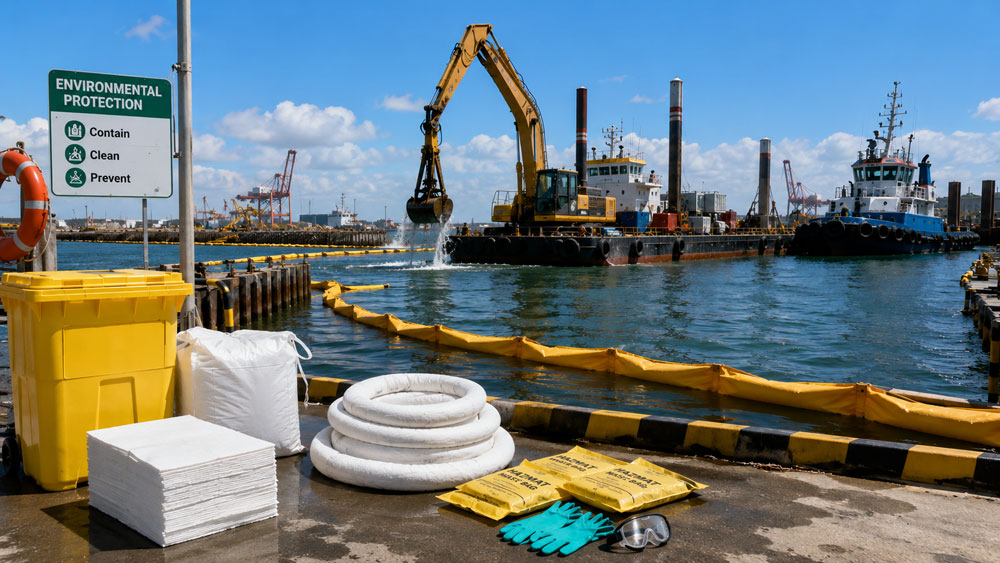
Port construction projects are complex, fast-moving, and exposed to many environmental risks. Whether the project involves dredging, quay wall construction, berth expansion, breakwater work, LNG terminal construction, or marine piling, contractors are usually operating close to water, fuel storage areas, hydraulic equipment, vessels, generators, and temporary working platforms.
That means even a small fuel leak or oil spill can quickly become a serious problem.
For port contractors, spill response equipment should not be treated as something to prepare after an accident. It should be part of the project setup before construction starts. Having the right oil spill response equipment on site helps contractors control leaks quickly, reduce environmental impact, meet project requirements, and avoid unnecessary work stoppages.
Port construction sites usually involve many types of equipment and materials that can cause accidental spills. Common sources include diesel tanks, fuel trucks, hydraulic power packs, cranes, excavators, dredgers, tugboats, workboats, generators, lubricants, and temporary chemical storage areas.
In land-based construction, a small spill may stay on the ground for a short period. But in port construction, the situation is different. Once oil or fuel enters the water, it can spread quickly with wind, waves, tides, vessel movement, or surface current.
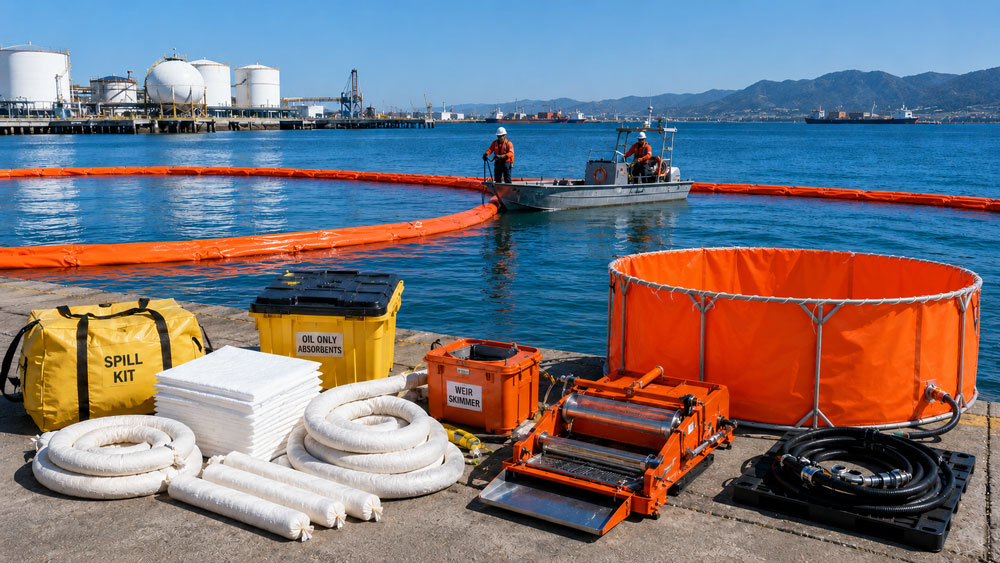
This is why marine contractors need both land-based and water-based spill control products. A complete preparation plan may include spill kits, oil absorbent pads, oil absorbent booms, oil containment booms, temporary storage tanks, spill containment berms, and oil skimmers.
For a more complete overview of different product types, you can also read our main guide here: Oil Spill Response Equipment: Complete Guide for Marine and Industrial Spill Control.
Many contractors only start looking for spill response products when the project owner, consultant, or environmental inspector asks for them. This creates unnecessary pressure.
By that time, the project may already be close to mobilization. If the contractor cannot provide a suitable spill response plan, the project may face approval delays, site inspection problems, or additional procurement costs.
Spill response equipment should be prepared before construction for three main reasons:
1. The equipment must match the site conditions.
2. Workers need to know where the equipment is stored and how to use it.
3. Emergency response must be fast, especially near water.
For example, a basic spill kit may be suitable for a small workshop or fuel storage corner, but it is not enough for a marine construction site with workboats, dredgers, and floating equipment. In that case, the contractor may need floating oil booms, absorbent booms, temporary storage tanks, and a clear deployment plan.
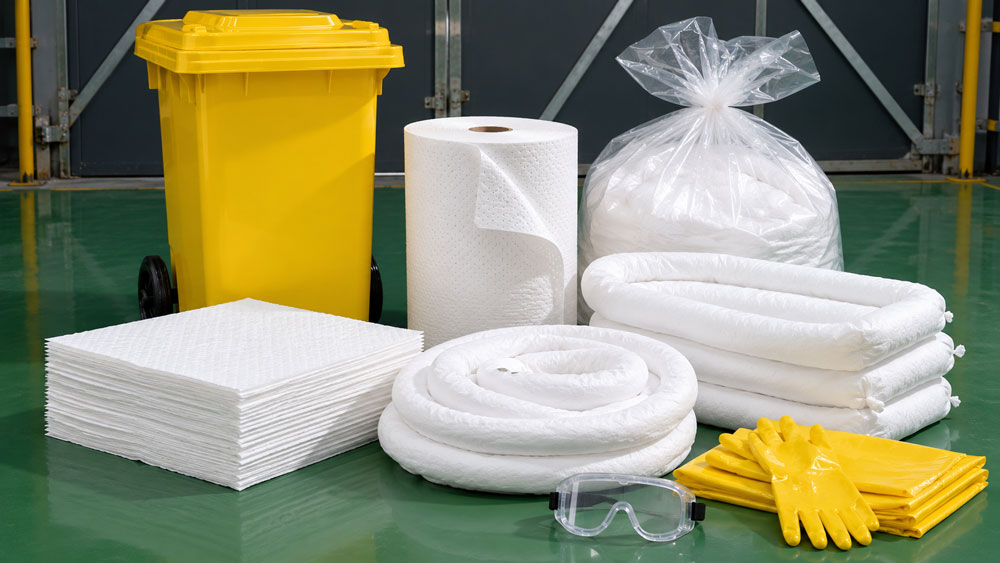
Spill kits are one of the most basic but important products for port contractors. They are usually placed near fuel storage areas, equipment maintenance zones, workshops, construction vehicles, and temporary site offices.
A typical oil spill kit may include oil absorbent pads, absorbent socks, pillows, disposal bags, gloves, and other cleanup tools. For port construction, oil-only spill kits are often preferred because they absorb oil and fuel while repelling water.
Contractors can use spill kits for:
Diesel leaks from generators or equipment
Hydraulic oil leaks from cranes and excavators
Fuel spills during refueling
Small lubricant spills in maintenance areas
Emergency cleanup before a spill reaches the water
For larger sites, spill kits should not be stored in only one location. They should be placed at several key points, especially near high-risk areas.
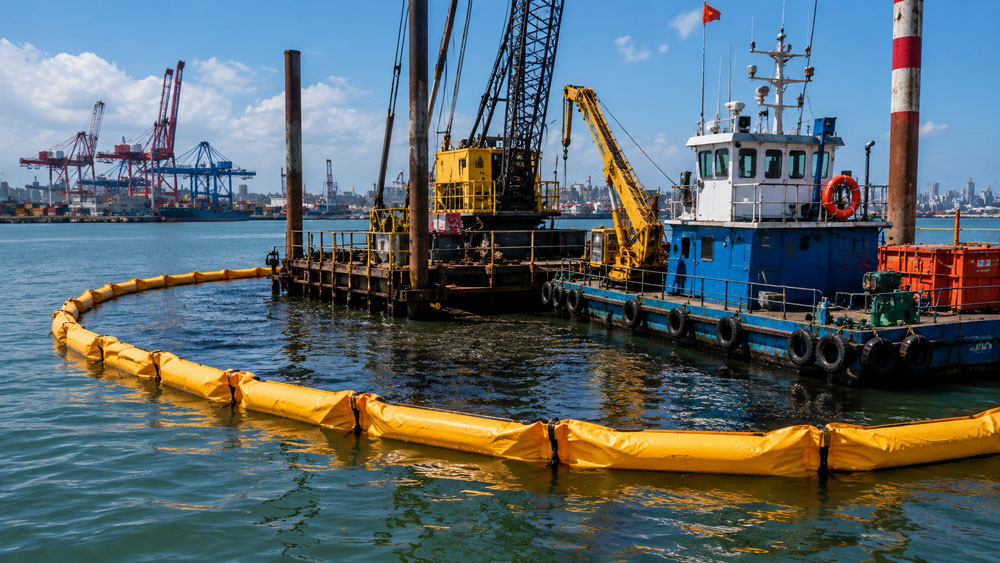
If construction takes place on or near the water, oil containment booms are often needed. These floating barriers help contain oil on the water surface and prevent it from spreading into nearby channels, berths, beaches, mangroves, fish farms, or sensitive coastal areas.
Port contractors may use oil containment booms around:
Dredging vessels
Fuel barges
Temporary marine platforms
Workboat berthing areas
Fuel transfer zones
Construction zones near quay walls
LNG terminal or oil terminal construction areas
For sheltered port waters, PVC fence booms or foam-filled oil booms may be suitable. For stronger current, longer deployment, or more demanding offshore conditions, inflatable rubber booms or heavy-duty foam booms may be required.
The boom design should be selected based on water depth, current speed, wave condition, deployment duration, vessel traffic, and available anchoring points.
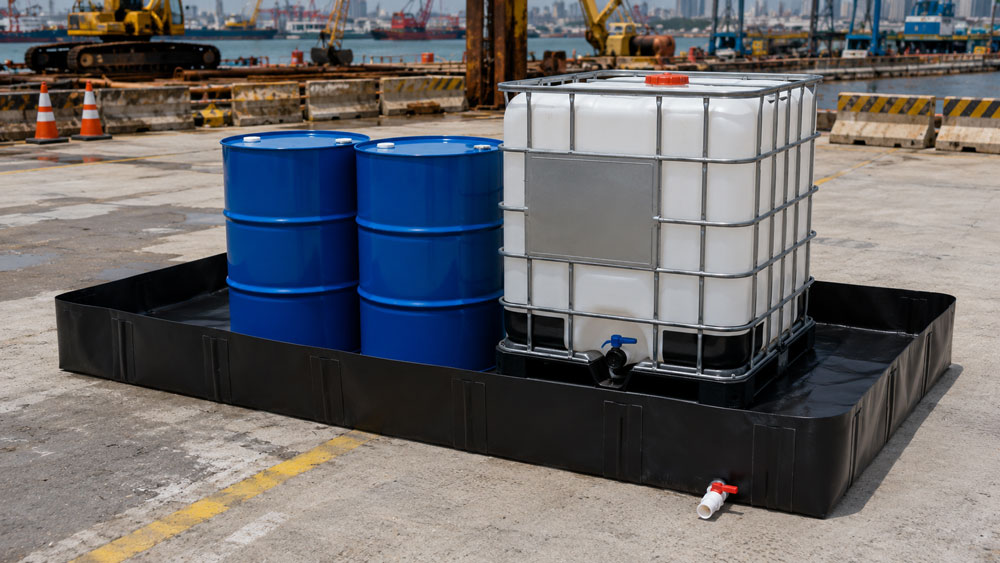
Not all spill risks happen on the water. Many spills start on land before they flow into drains, soil, or the sea. This is especially common around fuel tanks, chemical drums, IBC tanks, generators, refueling areas, and temporary storage zones.
A spill containment berm creates a secondary containment area. It helps keep leaked oil, fuel, or chemicals inside a controlled space instead of allowing them to spread across the site.
Port contractors can use spill containment berms for:
Temporary fuel tank storage
Generator sets
Oil drums and chemical drums
IBC tank storage
Truck loading and unloading
Equipment maintenance areas
Emergency decontamination areas
For construction sites, foldable or collapsible spill containment berms are useful because they can be moved, stored, and installed quickly. However, the material must be selected carefully according to the liquid type, chemical concentration, working temperature, and expected contact time.
For small spills, absorbents may be enough. But for larger spills on water, contractors may need oil skimmers and temporary storage tanks.
An oil skimmer helps recover floating oil from the water surface. The recovered oil-water mixture can then be transferred into a temporary storage tank, open-top tank, pillow tank, or other storage container before proper disposal.
This is especially important for projects involving:
Large fuel storage
Marine equipment refueling
Dredging vessels
Tanker berth construction
LNG terminal construction
Oil terminal maintenance
Long-term port expansion projects
Without recovery and storage equipment, contractors may only be able to contain the spill, but not remove it efficiently.
Many port projects are controlled by strict environmental management plans. Contractors may be required to submit a spill prevention and response plan before site work starts.
Project owners, port authorities, consultants, and environmental inspectors may ask questions such as:
What spill response equipment is available on site?
Where are spill kits located?
Is there an oil boom for marine spills?
Who is responsible for emergency response?
Is the equipment suitable for the site condition?
How will recovered oil and contaminated absorbents be stored?
Are workers trained to use the equipment?
If the contractor already has a proper equipment list and response plan, approval becomes smoother. It also shows that the contractor understands environmental protection, not just construction execution.
The exact equipment depends on the project size and risk level. However, a practical port construction spill response package may include:
Inflatable rubber oil boom for larger marine areas
Spill containment berms for tanks and drums
Disposal bags and hazardous waste labels
PPE, shovels, scrapers, buckets, and cleaning tools
Boom reel, anchor system, ropes, shackles, and marker buoys if needed
For dredging and port expansion projects, this package can also be combined with silt curtains, turbidity curtains, navigation buoys, and solar marine lights.
Before selecting equipment, contractors should clarify several key project details:
Is the spill risk on land, water, or both?
What liquids are stored or used on site?
Is the project in sheltered water, semi-sheltered water, or exposed water?
What is the expected current and wave condition?
How long will the project last?
Is the equipment for emergency standby or daily operation?
Does the project owner require a specific response capacity?
Will the contractor need training, spare parts, or deployment accessories?
A small port maintenance project may only need spill kits, absorbents, and a short oil boom. A large LNG terminal or dredging project may need a more complete system, including heavy-duty oil booms, skimmers, storage tanks, containment berms, and mooring accessories.
For port contractors, spill response equipment is not just an emergency product. It is part of project preparation, environmental protection, and risk control.
Preparing the right equipment before construction helps contractors respond faster, protect the water environment, satisfy project requirements, and reduce the risk of costly delays. Whether the project involves dredging, quay wall construction, berth expansion, LNG terminal construction, or marine piling, a proper spill response package should be ready before the first equipment enters the site.
If you are preparing for a port construction or marine engineering project, JXY can help provide oil containment booms, spill kits, absorbents, spill containment berms, oil skimmers, temporary storage tanks, and other oil spill response equipment according to your project conditions.


