

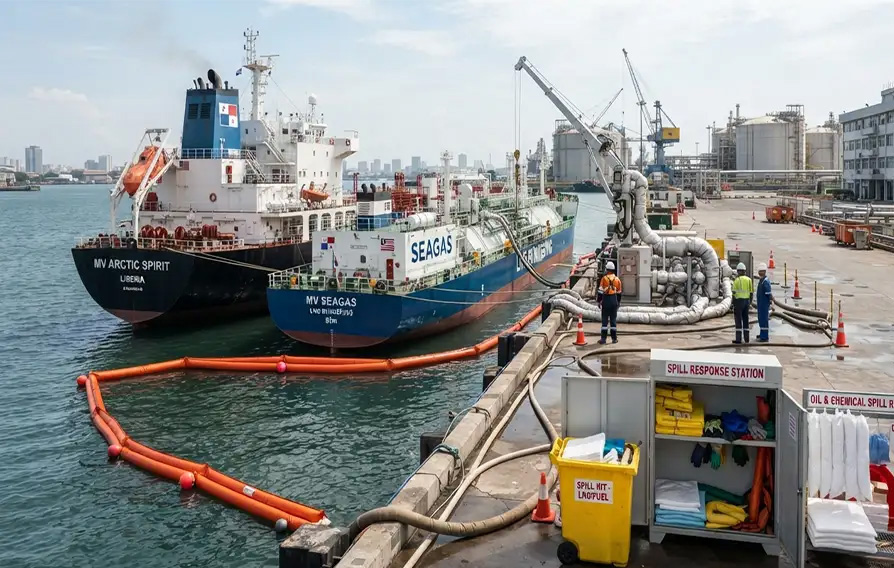
LNG bunkering ports are becoming increasingly important as the maritime industry looks for cleaner fuel solutions. Compared with traditional marine fuels, LNG can help reduce certain vessel emissions and support cleaner port operations.
However, LNG bunkering ports still face spill risks during daily operations.
Many people may think that LNG is not oil, so oil spill response equipment is not necessary. But in real port environments, the risk does not only come from LNG itself. LNG bunkering ports also involve diesel, lubricants, hydraulic oil, fuel vessels, tugboats, generators, maintenance equipment, trucks, and temporary storage areas.
If oil, fuel, or hydraulic fluid enters the water, it can spread quickly with wind, waves, tides, and vessel movement. This may affect port operations, delay vessel schedules, increase cleanup costs, and create environmental risks.
That is why LNG bunkering ports should prepare proper spill response equipment before operation begins.
LNG itself is not the same as oil. But LNG bunkering operations usually happen in busy port areas where many oil-related activities also exist.
For example, tugboats may use diesel fuel. Shore equipment may use hydraulic oil. Generators may require fuel storage. Maintenance teams may handle lubricants. Trucks, workboats, cranes, and other port equipment may also create spill risks.
A small leak on land can quickly reach the drainage system or flow into the sea. A small spill on the water can spread across the port basin within a short time.
For this reason, LNG bunkering ports need a complete spill response plan. This plan should include equipment for containment, absorption, recovery, temporary storage, and waste handling.
For a complete overview of marine and industrial spill control products, you can also read our main guide here: Oil Spill Response Equipment: Complete Guide for Marine and Industrial Spill Control.
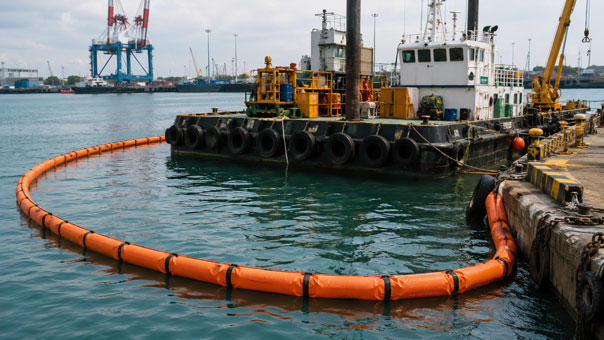
Oil containment booms are one of the most important products for LNG bunkering ports. They are used to contain floating oil on the water surface and prevent it from spreading to other areas of the port.
In LNG bunkering ports, oil booms may be deployed around:
Bunkering berths
Fuel transfer areas
Workboats and tugboats
Temporary marine platforms
Port construction zones
Emergency spill areas
Sensitive water zones near the terminal
For sheltered port waters, PVC fence booms or foam-filled oil booms are commonly used. They are suitable for harbor basins, terminals, and calm water conditions.
For stronger currents, longer deployment periods, or higher project requirements, inflatable rubber booms or heavy-duty foam booms may be more suitable.
The right oil boom should be selected according to water current, wave condition, water depth, deployment duration, vessel traffic, and anchoring arrangement.
Oil-only absorbents are also necessary for LNG bunkering ports. These products are designed to absorb oil while repelling water, making them suitable for marine and port environments.
Common oil-only absorbents include: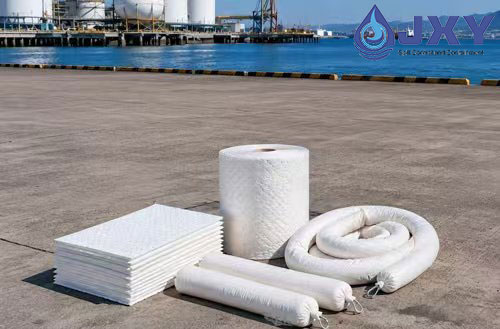
They can be used for small oil sheens on the water, minor fuel leaks, hydraulic oil spills, and remaining oil inside a containment area after an oil boom has been deployed.
Oil-only absorbent pads and rolls are usually used for quick cleanup. Absorbent socks can be placed around leaking equipment or drainage areas. Absorbent booms can be used on the water surface or inside a contained area.
For LNG bunkering ports, oil-only absorbents should be stored near high-risk areas, such as fuel transfer points, maintenance zones, generators, and emergency response stations.
Spill kits are essential for quick response to small leaks and spills. They should be placed in visible and easy-to-access locations throughout the port.
In LNG bunkering ports, spill kits are commonly placed near: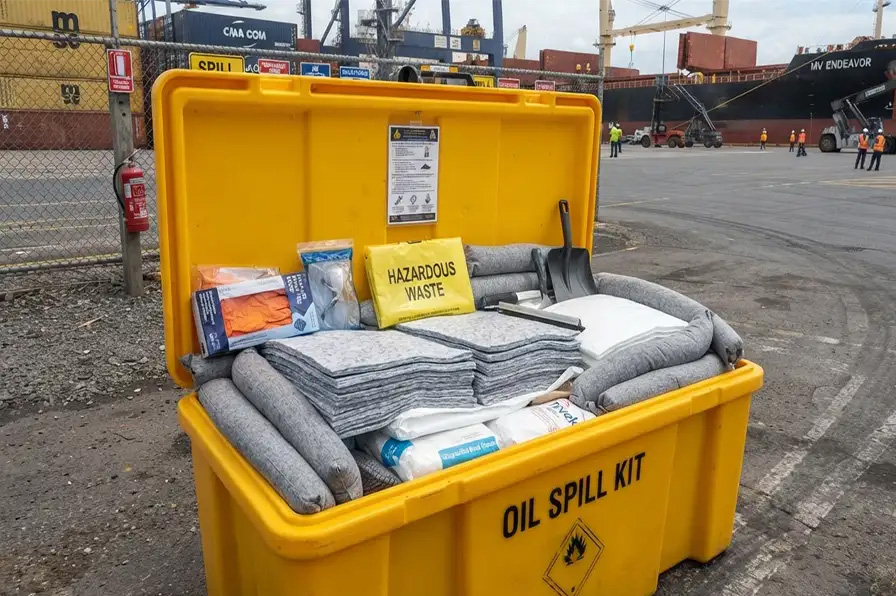
Bunkering stations
Equipment maintenance areas
Fuel storage zones
Generator areas
Drum storage areas
Workshops
Terminal working zones
A standard oil spill kit usually includes absorbent pads, absorbent socks, gloves, disposal bags, PPE, and cleanup tools. Larger spill kits may also include absorbent pillows, drain covers, warning labels, and additional protective equipment.
Spill kits help workers respond quickly before a small leak becomes a larger incident.
However, spill kits should not be the only spill response equipment at an LNG bunkering port. They are mainly suitable for small land-based spills or minor leaks. If oil has already entered the water, oil containment booms, absorbent booms, oil skimmers, and temporary storage tanks may also be needed.
Many spills do not start directly on the water. They often start on land first.
For example, oil drums, IBC tanks, mobile fuel tanks, generators, maintenance equipment, and temporary storage areas can all create spill risks. If these areas are not protected, leaked oil or fuel may flow into drains, soil, or nearby water.
Spill containment berms provide secondary containment for land-based spill risks. They create a controlled area to contain leaked liquids and prevent them from spreading across the site.
LNG bunkering ports can use spill containment berms for: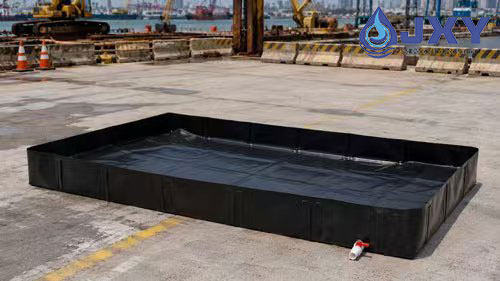
Fuel drums
IBC tanks
Generator sets
Mobile fuel tanks
Temporary chemical storage
Equipment maintenance zones
Truck loading and unloading areas
Foldable or collapsible spill containment berms are especially useful for port projects because they can be moved, installed, and stored easily. The material should be selected according to the liquid type, contact time, site condition, and chemical compatibility requirements.
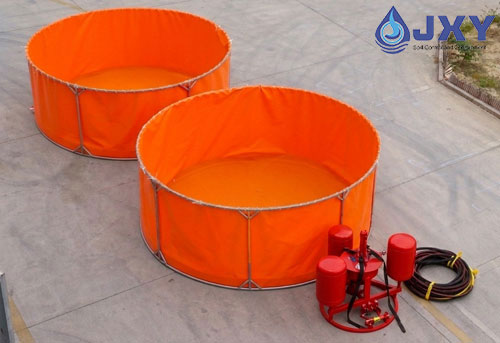
For larger spills, absorbents alone may not be enough. LNG bunkering ports may also need oil skimmers and temporary storage tanks.
An oil skimmer is used to recover floating oil from the water surface. The recovered oil-water mixture can then be transferred into a temporary storage tank for later treatment or disposal.
A complete larger-spill response process may include:
Use oil containment booms to control the spill area.
Use an oil skimmer to recover floating oil.
Transfer recovered liquid into a temporary storage tank.
Use absorbents for remaining oil sheen.
Collect contaminated materials for proper disposal.
Temporary storage tanks may include open-top tanks, pillow tanks, or other portable storage systems. They are useful for emergency response because they can be deployed quickly when permanent storage is not available.
The exact equipment list depends on the port size, water condition, bunkering frequency, vessel type, and risk level. However, a practical LNG bunkering port spill response package may include:
PPE
Disposal bags
Hazardous waste labels
Boom reel, ropes, shackles, anchors, and marker buoys if needed
For large LNG terminals or fuel transfer ports, the response package may also include emergency pumps, storage tanks, spare parts, training materials, and site-specific deployment plans.
The goal is not only to buy products, but to build a complete response system.
When selecting spill response equipment for an LNG bunkering port, the following questions should be considered:
Is the spill risk mainly on land, water, or both?
What types of oil, fuel, or chemicals are used on site?
Is the port water sheltered or exposed?
What are the current and wave conditions?
How often does bunkering take place?
What size of vessel is involved?
How fast should the response team act?
Where will contaminated absorbents and recovered oil be stored?
Does the port need training, spare parts, or deployment accessories?
A small port may only need spill kits, absorbents, and a short oil boom. A large LNG terminal or busy bunkering port may need a complete package with oil booms, skimmers, storage tanks, containment berms, and response accessories.
LNG bunkering ports are designed for cleaner marine fuel operations, but they still need proper spill response equipment.
The main risk may not come from LNG itself, but from diesel, lubricants, hydraulic oil, fuel vessels, port equipment, and maintenance activities around the bunkering area.
Preparing the right spill response equipment before operation helps reduce pollution risks, protect port operations, meet environmental requirements, and avoid costly delays.
JXY can provide oil containment booms, oil-only absorbents, spill kits, spill containment berms, oil skimmers, temporary storage tanks, and other spill response equipment for LNG bunkering ports, terminals, and marine engineering projects.
If you are preparing an LNG bunkering project or port environmental protection plan, JXY can help you select the right spill response package according to your site conditions.


