

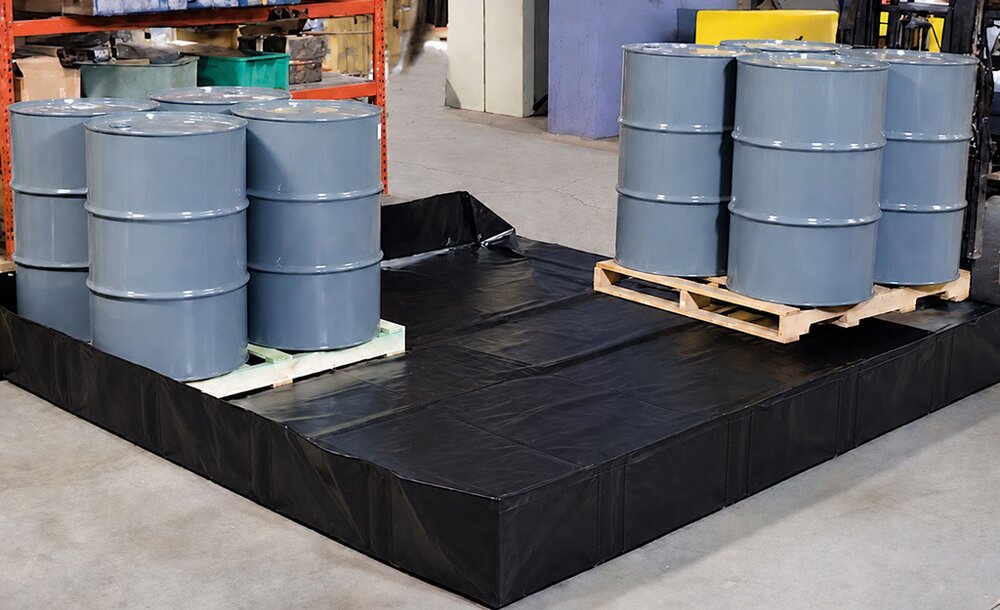
Fuel, hydraulic oil and lubricants are part of daily operations at many industrial sites. They may be stored in tanks, drums or IBCs, used in generators and machinery, or transferred between vehicles and equipment. The risk is not only a major spill. Small leaks can also spread into drains, soil or nearby waterways if there is no secondary containment.
A spill containment berm creates a temporary, liquid-tight area around the source so fuel or oil can be controlled before it spreads. For industrial buyers, it is a practical way to add containment where permanent bunding is unavailable or not flexible enough.
A spill containment berm creates a raised containment area around tanks, drums, vehicles, generators or other equipment. If a leak occurs, the liquid remains inside the berm until it can be pumped, vacuumed or cleaned up.
This is particularly useful at temporary work areas where generators, fuel tanks and service equipment may move during a project. A portable berm can be deployed, cleaned, folded and moved with the operation.
JXY’s portable and collapsible spill containment berm is designed for applications including tanks, drums and vehicles. Standard capacities are available, and custom sizes can be produced when a project requires a specific footprint or containment volume.
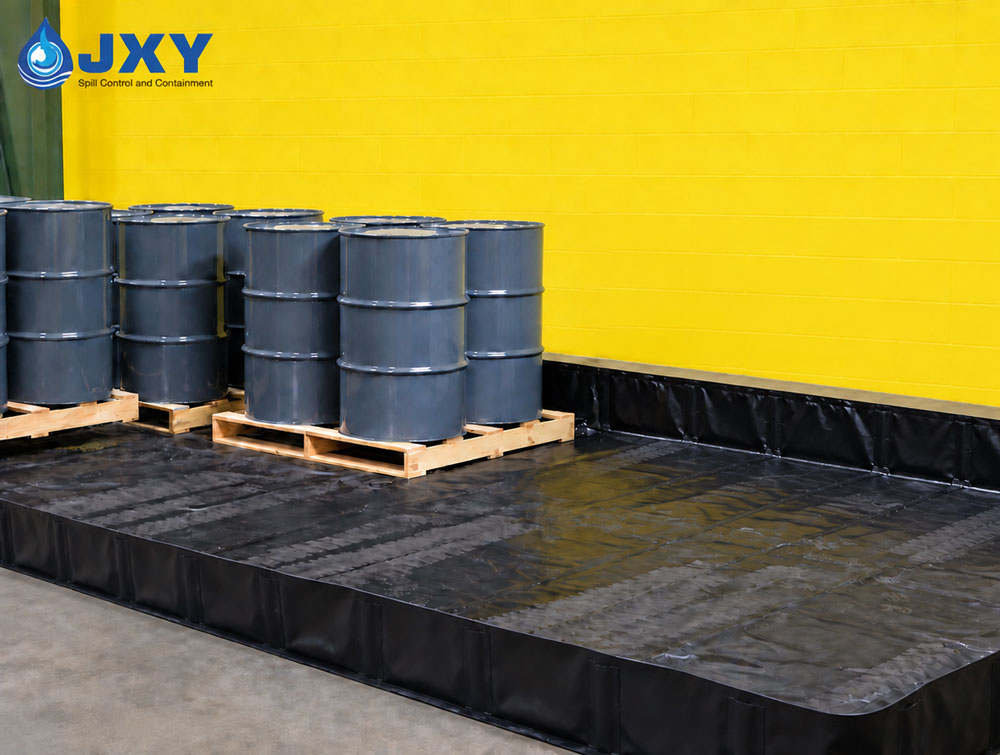
Fuel storage is one of the most common applications for a spill berm.
Temporary diesel tanks, day tanks, fuel bowsers and drums may be secure during normal operation, but leaks can still occur from valves, hoses, fittings, overfilling or accidental damage. Without secondary containment, fuel can move well beyond the storage area before anyone has time to react.
A berm creates a defined zone beneath or around the fuel source. It also makes small leaks easier to see and manage because the liquid stays within a controlled area instead of disappearing into gravel, soil or drains.
For sites developing a broader spill response program, our Oil Spill Response Equipment guide explains how containment, recovery, temporary storage and absorbent products can work together.
Large tanks are not the only risk. Generators, hydraulic power packs, pumps, compressors and construction machinery can leak diesel, lubricating oil or hydraulic fluid during operation and maintenance.
A containment berm can provide a controlled area beneath this equipment, especially during servicing, hose changes or fluid replacement. This becomes more important when machinery operates near stormwater drains or close to the waterfront.
For ports and marine construction sites, a land-based leak can quickly become a water pollution problem. Our article Why Port Contractors Need Spill Response Equipment Before Construction explains how secondary containment can be combined with marine spill response equipment before mobilization.
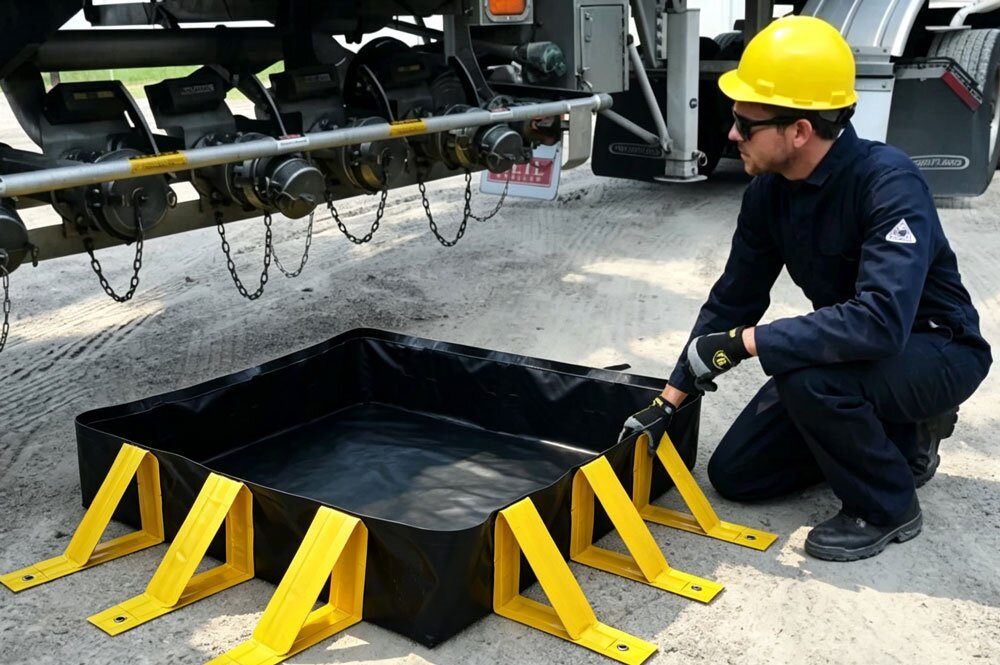
Liquid transfer is another point where spills can occur. Hoses, couplings and connection points are under active handling, and one loose fitting or damaged hose can release fuel quickly.
Portable spill berms are useful because they can be positioned around temporary transfer areas without permanent civil work. They can also be relocated when the loading point changes.
For vehicle or equipment applications, the berm needs enough space for the equipment footprint, working room and sufficient containment volume. The smallest size that physically fits is not always the best solution.
One of the strongest reasons to use a spill berm is the cost and disruption that can be avoided when a leak is contained early.
Oil that remains inside a berm is easier to recover than oil that has spread across a large concrete area, entered gravel or contaminated soil. The collected liquid can be pumped or vacuumed out, while absorbents can be used for remaining residue.
A berm cannot prevent every leak, but it can reduce the area affected and make the response much more controlled.
For more on the consequences of having no secondary containment in place, see Risks of Not Using a Spill Containment Berm.
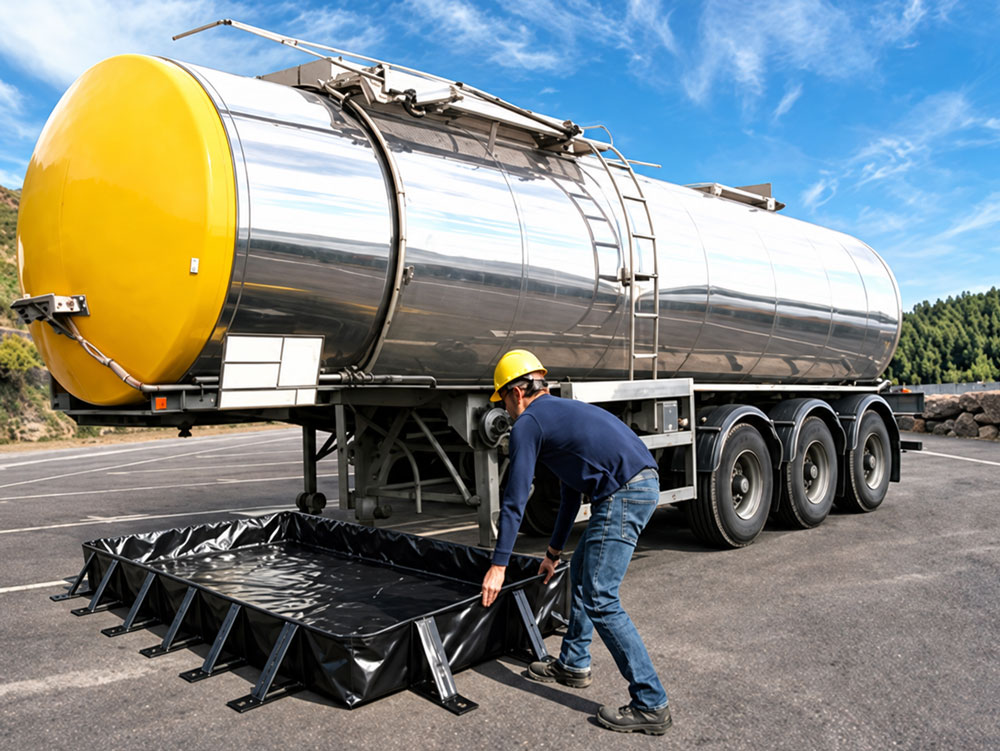
A spill containment berm is a relatively simple product, but buyers still need to get the dimensions right.
The first consideration is the footprint of the tank, drums, vehicle or machinery that will sit inside the berm. The second is the volume of liquid the berm may need to retain. Wall height also affects usable capacity and access.
A large berm may offer more volume but be difficult to deploy in a restricted work area. A smaller berm may fit the equipment but provide too little containment capacity.
JXY offers standard capacities as well as custom sizes. Buyers can provide the equipment dimensions, available installation area and required containment volume so we can recommend a practical configuration rather than simply quoting the nearest standard size.
This is also where buying directly from a manufacturer can be useful. Instead of choosing only from fixed catalogue dimensions, the berm can be sized around the actual equipment and site layout.
Industrial containment equipment may be exposed to rough floors, outdoor weather, repeated folding and contact with oil or fuel. The construction therefore needs to suit actual site use.
JXY spill containment berms are available with heavy-duty PVC construction and collapsible supported side walls. Ground covers and tread pads can also be considered where floor conditions or equipment movement increase wear.
For repeat use, buyers should also consider deployment, cleaning and storage. A portable berm is most useful when it can be set up and packed away efficiently.
This is particularly important for contractors and emergency response teams that may need to move containment equipment between different project locations.
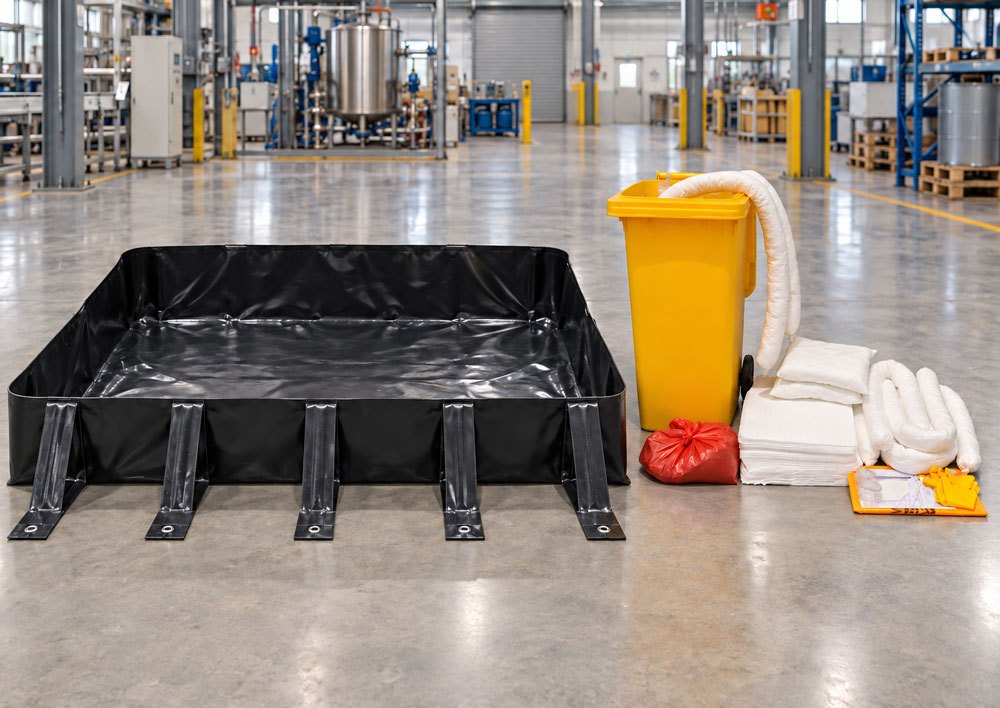
Secondary containment is important, but a berm does not replace other spill response equipment.
Absorbent pads, rolls or socks may still be required for final cleanup. Collected liquid may need to be transferred to a temporary storage tank. If the site is close to water, oil containment booms may be required as an additional line of defense.
The practical approach is to match equipment to the full response process. The berm controls the source area, absorbents handle residue, pumps or vacuum equipment remove collected liquid, and temporary storage provides holding capacity.
This can also simplify procurement by building one response package around the site’s actual risks.
For industrial facilities that handle both land-based and waterfront spill risks, JXY can combine spill containment berms with oil absorbents, spill kits, temporary storage tanks, pumps and marine oil containment booms as part of a complete oil spill response package.
A custom berm can be useful around a specific generator, fuel tank, vehicle, machinery skid or temporary fuel system. It may also be required when a project has a defined capacity requirement or limited available space.
When requesting a quotation, send the equipment length and width, the liquid being contained, the required volume and any special access requirements. Better application information reduces the risk of buying a berm that is too small, unnecessarily large or difficult to use.
For example, if the berm will be used beneath a generator, JXY needs to know the generator footprint and the required containment capacity. If it will be used for a tanker, vehicle or machinery maintenance area, access and working space also become important.
The objective is not simply to manufacture a larger berm. It is to supply a containment area that works properly for the actual site.
Industrial spill response is most effective when equipment is already in place before something goes wrong.
A portable spill containment berm can protect fuel storage areas, generators, machinery, drums, IBCs, vehicles and transfer points from becoming much larger contamination problems.
For industrial facilities, construction sites, ports, shipyards and marine contractors, secondary containment can also become part of a wider spill prevention and response strategy rather than a standalone product kept in storage.
JXY can supply portable and collapsible spill containment berms in standard or customized sizes. Berms can also be supplied together with absorbents, spill kits, temporary storage tanks and other oil spill response equipment.
If you are preparing a new project, upgrading your spill response inventory or need secondary containment for a specific tank, generator, vehicle or piece of machinery, send us the equipment dimensions, required containment capacity and application details.
JXY can help you select a practical spill containment berm size and, where required, build it into a more complete spill control package for your site.


