

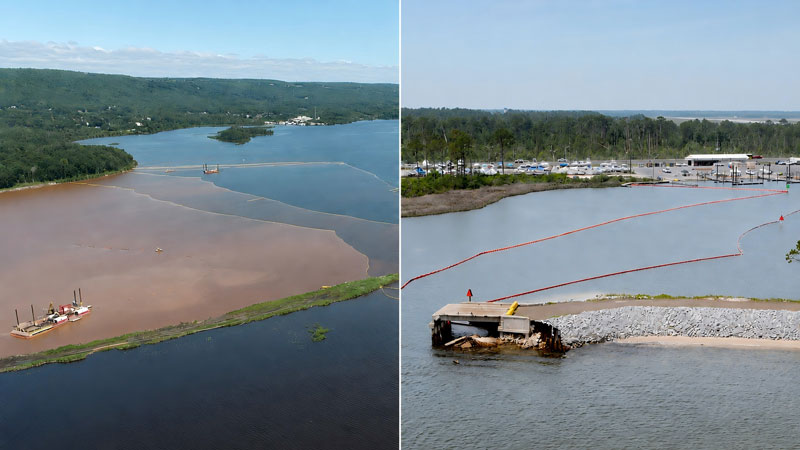
Silt curtains and oil containment booms are both floating barriers used on water. From a distance, they may look similar because both products normally have a floating section above the surface, a flexible fabric section below the water and connectors that join individual sections together.
However, they are designed to control different types of pollution.
A silt curtain helps limit the movement of suspended sediment generated by dredging and marine construction. An oil boom is designed to contain or divert oil floating on the water surface. Selecting the wrong barrier may reduce its effectiveness and create unnecessary risks for the project.
Understanding the difference between a silt curtain and an oil boom is therefore important before requesting a quotation or preparing an environmental protection plan.
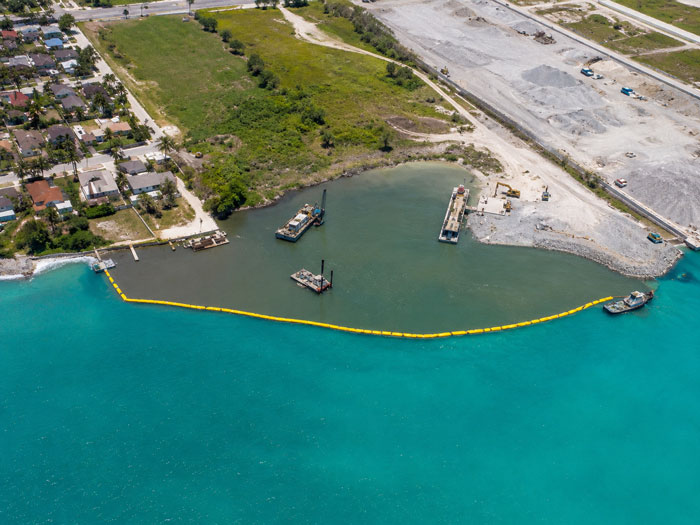 A silt curtain, also known as a turbidity curtain or sediment curtain, is used to control suspended soil, sand and fine particles in water.
During dredging, piling, reclamation and other marine construction activities, sediment on the riverbed or seabed can be disturbed. Fine particles may remain suspended and move away from the working area with waves, currents or tidal movement.
The underwater skirt of a silt curtain creates a temporary boundary around or beside the construction area. It helps reduce the uncontrolled spread of suspended sediment and gives particles more time to settle within a designated zone.
Silt curtains are commonly used in ports, harbors, rivers, lakes, canals, reclamation areas and bridge construction projects. For more examples, read Where Are Silt Curtains Used? Common Applications in Marine Construction.
You can also learn more about how silt curtains control sediment dispersion during dredging.
An oil containment boom is a floating barrier designed to contain or redirect oil that has spilled onto the water surface.
Because most oils initially float, an oil boom uses freeboard above the water to reduce surface splash-over and a relatively short draft below the surface to help prevent oil from passing underneath. A ballast chain or other weight helps keep the boom stable and upright.
Oil containment booms are used by ports, marine terminals, oil storage facilities, refineries, power plants, spill-response organizations and vessels. They may be kept in storage for emergency deployment or installed in advance around areas with a higher risk of oil spills.
The boom itself does not remove oil from the water. Once the oil has been contained, skimmers, pumps, absorbents or other recovery equipment are normally required to collect it.
JXY supplies different types of oil containment booms for protected water, harbors, shorelines and offshore spill-response operations.
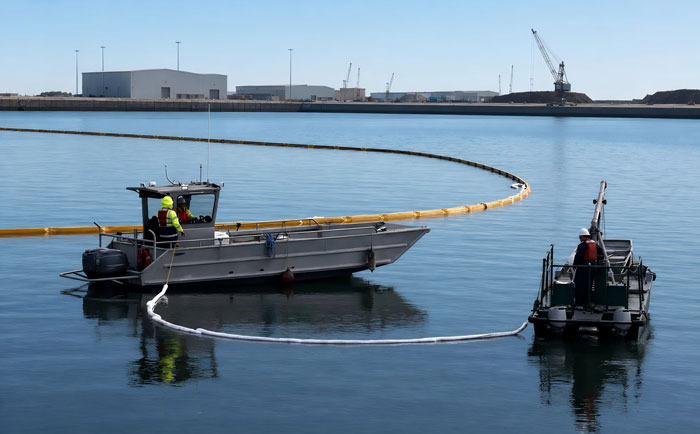
The easiest way to understand the difference is to look at the material each barrier is expected to control.
A silt curtain deals with suspended solid particles within the water, such as soil, clay, sand and disturbed sediment. An oil boom deals mainly with oil and other floating hydrocarbons at or close to the water surface.
This difference affects the shape and configuration of the products.
A silt curtain often requires a deeper underwater skirt because sediment may be suspended below the surface. The necessary depth varies according to the project and water conditions.
An oil boom generally has a shorter underwater draft because its purpose is to intercept floating oil. Its fabric and components also need to be suitable for contact with oil, seawater and outdoor conditions.
A silt curtain should not automatically be used as an oil boom simply because it floats. Similarly, an oil containment boom should not be expected to control a sediment plume created by dredging.
Silt curtains and oil booms belong to the same general family of floating marine barriers. They may both include flotation, reinforced fabric, ballast, tension components and section connectors.
This shared construction explains why customers sometimes confuse them when viewing product photographs.
The visible flotation section is only one part of the system. Much of the functional difference is below the water surface. A silt curtain usually has a longer vertical skirt for sediment control, while an oil boom has freeboard and draft proportions selected for floating oil containment.
Color alone cannot identify the product. Both barriers may be manufactured in orange, yellow or other high-visibility colors. Customers should therefore check the product structure, skirt depth, fabric and intended application instead of selecting a barrier based only on appearance.
This is an important location for a real JXY photograph because it provides evidence that JXY manufactures and understands both product types.
A standard oil boom is generally not the right choice for controlling suspended sediment.
Its underwater draft is usually designed to intercept floating oil rather than create a deeper boundary for disturbed soil and sediment. Even if an oil boom appears similar at the surface, it may not provide the depth or configuration required for a dredging project.
If the project involves piling, excavation, dredging or reclamation, a purpose-designed silt curtain should normally be considered.
The curtain still needs to match the installation environment. A product intended for a calm lake may not be suitable for a port affected by waves, tides, currents and vessel traffic.
A silt curtain should not be selected as a substitute for an oil containment boom without a proper assessment.
Although some silt curtains use impermeable PVC-coated fabric, that does not automatically mean the complete system is designed for oil-spill containment. Oil booms may require oil-resistant materials, suitable freeboard, the correct draft and connectors intended for spill-response deployment.
Using a very deep silt curtain during an oil-spill response may also create unnecessary water resistance and make deployment more difficult.
When the main risk is floating oil, an oil containment boom designed for the relevant water conditions is the safer and more appropriate choice.
Some projects may need both silt curtains and oil containment booms, but they serve separate purposes.
For example, a port expansion or dredging project may use a silt curtain around the active construction zone to control suspended sediment. At the same time, the contractor may keep oil booms nearby as part of an emergency response plan for fuel leakage from dredgers, barges or other construction equipment.
An LNG terminal, port or marine construction site may also maintain oil-spill equipment while using sediment-control barriers for temporary civil works.
In these situations, the two products complement each other. They should be treated as separate systems rather than interchangeable barriers.
Start by identifying what the project needs to control.
If the main concern is sediment disturbed by dredging, piling, excavation or reclamation, the project is likely to require a silt curtain. If the concern is oil floating on the surface, an oil containment boom is the appropriate product category.
If the site must control trash, seaweed, logs or other floating debris, a trash or debris boom may be required instead. Similar-looking floating barriers can have very different functions.
Before requesting a recommendation, provide the application, deployment location, required length, water depth and available information about currents, waves and tides. For oil-spill projects, it is also helpful to explain whether the boom is intended for permanent installation, preventive deployment or emergency response.
JXY manufactures both silt curtains and oil containment booms and can customize section length, total height, fabric, flotation and connectors according to project requirements.


