

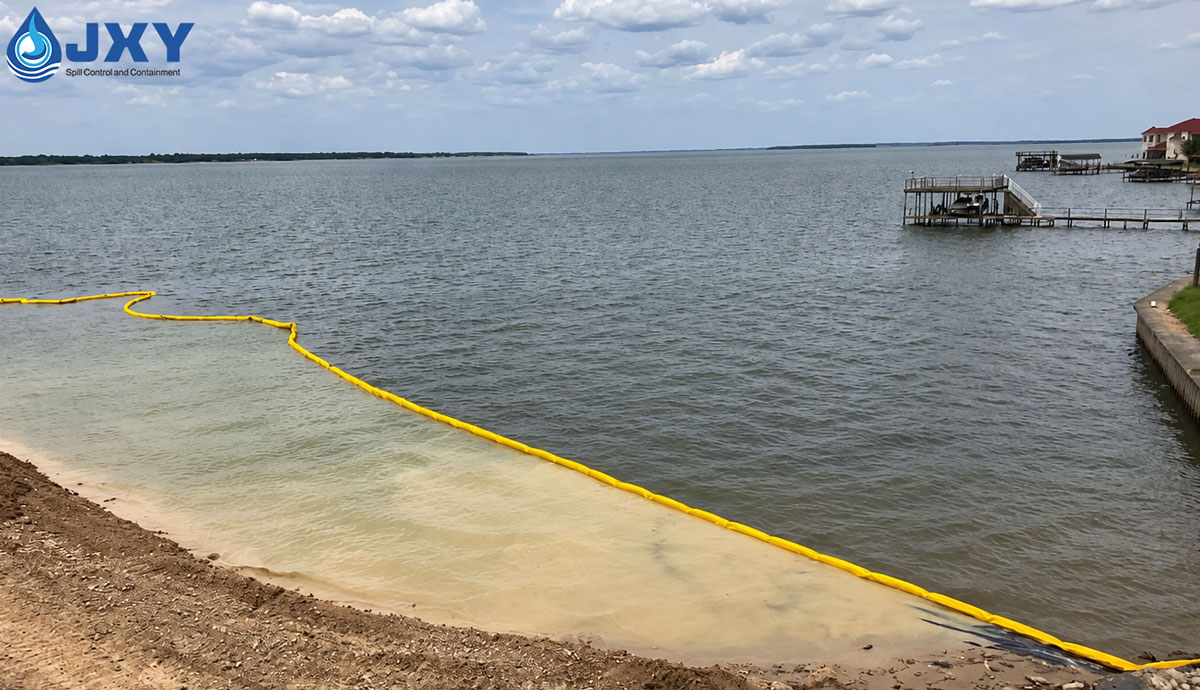
Dredging, reclamation, piling and marine construction can disturb large quantities of sediment below the water surface. Once fine sediment becomes suspended, currents, tides and waves may carry it beyond the active work area, increasing turbidity and making environmental control more difficult.
A silt curtain, also known as a turbidity curtain or sediment curtain, creates a temporary barrier around or beside the work zone. But for a large marine project, simply ordering a curtain with a float and a long skirt is not enough.
The curtain needs to work with the actual water depth, current, tidal variation, sediment type, construction method and deployment period.
This is why JXY approaches silt curtains as project-specific systems rather than one standard product for every site.
For a general overview of available configurations, contractors can first review the JXY Silt Curtain product range, covering systems for protected water through more demanding marine environments.
The purpose of the curtain remains similar across most projects: reduce uncontrolled sediment dispersion outside the work zone.
The way this is achieved, however, can vary considerably.
A small piling project in sheltered water may only require a relatively simple floating curtain. A major reclamation project operating for many months may require stronger flotation, reinforced tension members, deeper skirts and a carefully designed anchoring arrangement.
Dredging introduces another challenge because the sediment source is often moving. A grab dredger, cutter suction dredger or barge operation may require a different containment layout from a fixed shoreline construction site.
This is why project application should be established before the curtain specification is finalized.
For contractors still determining the required duty level, our Type 1 vs Type 2 vs Type 3 Silt Curtains: Selection Guide explains how different curtain classes relate to changing water conditions and project demands.
Dredging is one of the most common applications for silt curtains.
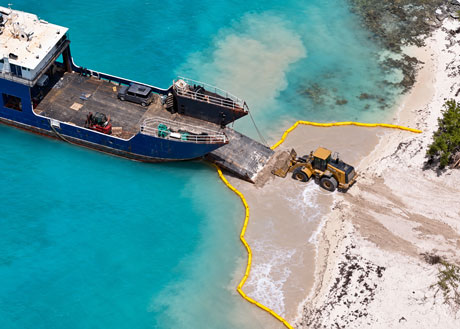
During excavation, lifting or seabed disturbance, sand, silt and fine clay can enter the water column. Coarser particles may settle relatively quickly, while very fine material can remain suspended and travel farther from the dredging area.
A floating silt curtain can help create a controlled zone around the work area and reduce the uncontrolled movement of suspended material.
However, the layout should follow the dredging method.
For some projects, a conventional curtain can surround a larger work zone. For grab dredging, a more localized enclosure may be preferable. JXY also manufactures Frame Type Silt Curtains, which can be designed to surround the active grab dredging area so sediment control takes place closer to the source.
This type of project-specific approach can be more effective than automatically installing the same continuous curtain configuration around every dredging operation.
For more background on the role of sediment barriers during dredging, see Why Are Silt Curtains Needed in Dredging Projects?
Reclamation projects often involve a different scale.
Construction may continue for months, the work area can extend over a large waterfront, and the silt curtain may be exposed to tides, vessel wakes and changing seasonal conditions.
Long deployment periods also increase the importance of component durability.
Float size, top tension members, ballast chains, connectors and anchoring arrangements need to be considered together. If only the fabric weight is increased while the rest of the system remains unchanged, the curtain does not necessarily become suitable for a more demanding project.
JXY can manufacture curtains in modular sections so long project lengths can be connected, installed and maintained more practically.
Section length should also remain manageable. Extremely long individual sections may sound convenient when preparing a specification, but they can become difficult to transport, deploy, tension and replace on site.
For this reason, JXY normally recommends determining section length together with the contractor rather than simply manufacturing the longest possible continuous section.
Silt curtains are also used during pile driving, bridge construction, port expansion, quay works, shoreline construction, intake installation and other marine infrastructure activities.
In these projects, the sediment source may be more localized than in a dredging operation, but water movement can still carry disturbed material outside the immediate construction zone.
A suitable curtain layout can help isolate the affected area without unnecessarily enclosing a much larger body of water.
Our article Where Are Silt Curtains Used? Common Applications in Marine Construction covers these applications in more detail and can help contractors determine whether turbidity control should be included in their construction plan.
Water depth is important, but current is often the more critical design factor.
As water moves against the curtain skirt, the system experiences increasing horizontal force. A long, deep curtain in moving water can behave very differently from the same product installed in a calm lake.
For relatively protected environments, lighter-duty systems may be sufficient.
Where moderate currents, tides, waves or vessel wakes are present, a stronger system such as a DOT Type III Heavy Duty Silt Curtain may be considered. More demanding high-energy projects may require further reinforcement or a project-specific heavy-duty design.
The important point is that the curtain should not be selected only by overall height or fabric weight.
Floatation, tensile strength, connectors, ballast and anchoring all need to work as one system.
Silt curtain classification gives contractors a useful starting point, but the type number alone should not replace actual project assessment.
Type I systems are generally associated with protected water and low environmental loading. Type II systems can be used where moderate water movement is expected. Type III heavy-duty systems are designed for more demanding current, wind and wave conditions.
JXY also works with reinforced and customized configurations for projects where standard curtain designs are not sufficient.
The final solution may involve changes to float size, fabric strength, tension members, skirt material, ballast chain, section length, connectors or anchoring arrangement.
The goal is not to sell the heaviest curtain available. It is to supply enough strength for the project without adding unnecessary weight, drag and installation difficulty.
Two projects with the same water depth may still require very different curtains.
One may involve static piling inside a sheltered harbor. Another may involve continuous dredging in tidal water. A third may be a reclamation project requiring several hundred or several thousand meters of curtain for long-term deployment.
This is why JXY does not need only the required quantity when preparing a serious project proposal.
Project location, application, total required length, water depth, skirt depth, current velocity, wave conditions, tidal range, deployment period, sediment type and installation arrangement can all influence the recommendation.
If drawings, environmental specifications or tender documents are available, they can also be reviewed before the final curtain configuration is confirmed.
For contractors, the objective should not simply be to obtain the lowest price per meter.
A silt curtain that is difficult to install, excessively loaded by the current or poorly matched to the dredging method can create much greater costs once the project begins.
A more practical purchasing approach is to match the barrier to the site before production.
JXY has manufactured silt curtains and marine environmental protection equipment since 2004 and supplies customized systems for dredging, reclamation, port construction and other marine works worldwide.
Our range includes Type I, Type II, Type III and reinforced heavy-duty silt curtains, permeable and impermeable skirts, custom flotation systems, different section lengths, anchoring accessories and frame-type systems for specialized dredging applications.
If you are preparing a new dredging, reclamation or marine construction project, send JXY your project drawing or specification together with the water depth, required length and available information on current, waves and deployment period.
Instead of quoting only a curtain price per meter, we can help determine a practical configuration for the actual project conditions.


