

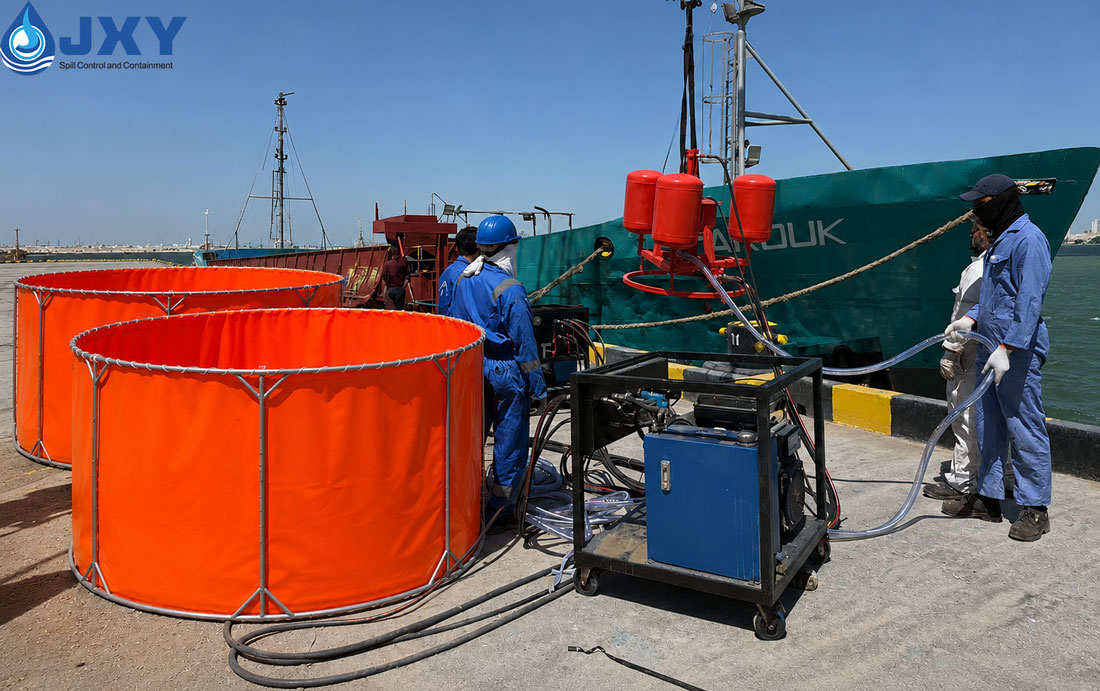
Ports, terminals and marine facilities face very different spill risks. A sheltered commercial harbor may only need equipment for rapid containment and small fuel spills, while an oil terminal, LNG facility or large marine construction project may require a complete response system including oil booms, skimmers, temporary storage and recovery equipment.
For buyers, the challenge is often not finding individual products. It is knowing what equipment is actually required, what capacity to select, and what information should be sent to the supplier before requesting a quotation.
This checklist is designed to make that process easier.
For a broader introduction to containment, recovery, absorbents and temporary storage equipment, see our Oil Spill Response Equipment: Complete Guide for Marine and Industrial Spill Control.
Before asking how many metres of oil boom or what type of skimmer to purchase, first identify the main spill risks at the port.
Spill risks can arise from many routine port activities, including vessel bunkering and fuel transfer, tugboat and workboat operations, fuel storage and loading, machinery maintenance, hydraulic equipment, tanker operations and marine construction work.The equipment package should match the actual risk.
For example, a small maintenance spill near a workshop may be handled with absorbents and spill kits. Once oil reaches the water, however, floating containment, recovery and temporary storage may also be required.
This is why simply sending a supplier a request for “oil spill response equipment” is usually not enough to prepare an accurate proposal.
For marine spills, an oil containment boom is normally one of the first pieces of equipment considered because it helps limit the spread of floating oil and creates a controlled area for recovery.
Before requesting a boom quotation, provide:
Application: Emergency standby or permanent deployment
Required length: For example 200 m, 500 m or 1,000 m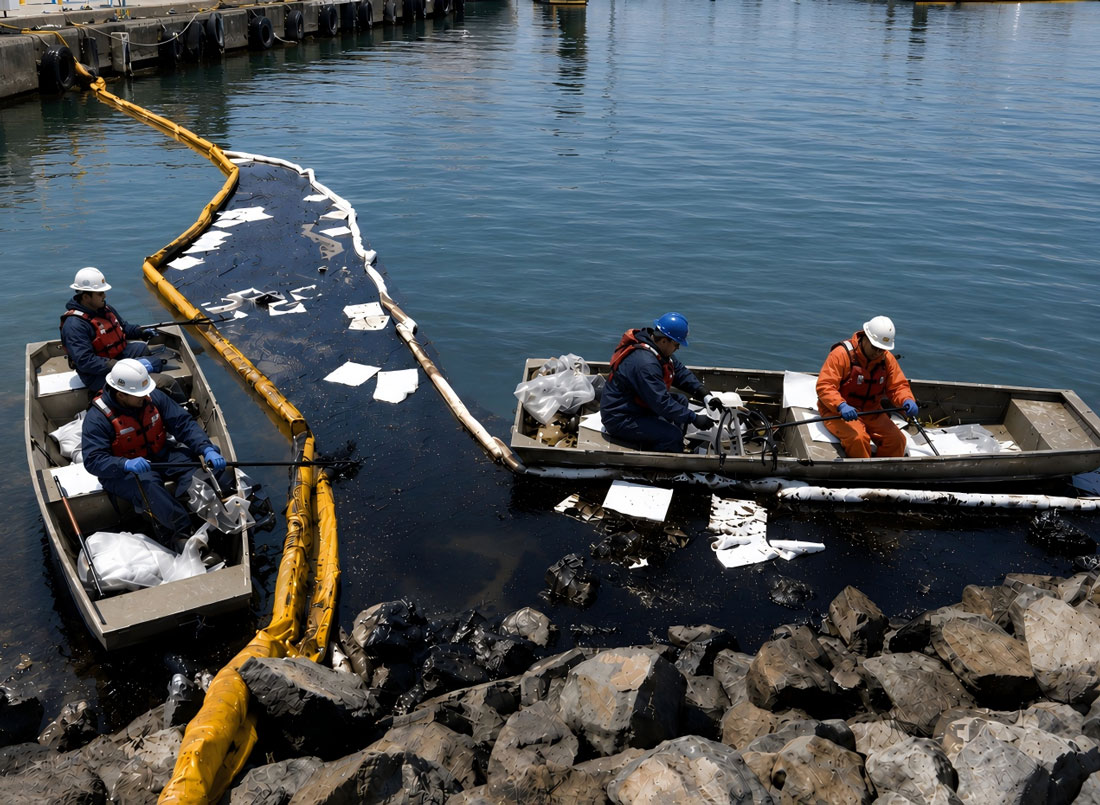
Water conditions: Sheltered, semi-sheltered or exposed
Current and waves: If known
Deployment area: Berth, terminal, harbor basin, vessel or offshore area
Storage method: Container, boom reel, trailer or warehouse
Different boom designs are suitable for different applications.
Fence booms can be attractive where compact storage and fast deployment are important, while cylindrical solid-float designs provide a different level of buoyancy and water-following performance.
➡ Fence Boom vs. Solid Float Boom: Which Oil Containment Solution Is Right for You?
For ports in the Middle East, Southeast Asia, Latin America and other hot regions, UV exposure, temperature and long-term outdoor storage should also be considered.
➡ How to Choose Oil Boom for Hot Climate Ports
Containment is only the first step.
If the response plan must handle a larger volume of recoverable oil, the buyer should also consider an oil skimmer.
When selecting an oil skimmer, buyers should consider the expected oil type, estimated spill size, required recovery capacity, local water conditions and the possible presence of debris. It is also important to confirm whether the skimmer will be operated from shore, a workboat or a dedicated response vessel, as this can affect the most suitable system configuration.
Different skimmer technologies perform differently depending on oil viscosity and operating conditions.
For a small port emergency inventory, absorbents may handle minor spills. For terminals or facilities preparing for larger incidents, combining a boom with a skimmer provides a more complete containment-and-recovery system.
One question is frequently overlooked during procurement:
After the oil is recovered, where will you put it?
A skimmer without sufficient temporary storage can quickly become difficult to operate during a real response.
Depending on the required capacity and deployment method, temporary storage may include:
Portable open-top tanks
Collapsible PVC tanksFloating towable oil bladders
Other temporary liquid storage systems
When requesting a quotation, tell the supplier the approximate storage capacity required and whether the tank needs to be portable, floating or suitable for shore-side deployment.
Not every spill requires deployment of the full marine response system.
Ports usually have many smaller spill risks around workshops, generators, fuel handling points, machinery, vehicles and dock areas.
A practical spill response inventory can include oil absorbent pads and rolls for surface cleanup, absorbent socks and booms for containing smaller spills, absorbent pillows for concentrated leakage, as well as portable spill kits, disposal bags and basic PPE for on-site response.
Oil-only absorbents are particularly useful in marine and wet environments because they are intended for oil and hydrocarbon recovery while limiting unnecessary water absorption.
For LNG bunkering facilities, the spill risks are not limited to LNG itself. Diesel, hydraulic oil, lubricants, workboats and supporting port equipment can also create hydrocarbon spill risks.
➡ Spill Response Equipment for LNG Bunkering Ports
A quotation for oil spill response equipment should cover more than just the main equipment. Depending on the system and deployment method, buyers may also need supporting accessories such as boom reels, air blowers for inflatable booms, tow bridles, anchoring and mooring equipment, shackles, repair kits, transfer pumps, hoses, marker buoys and marine lights. Including these items from the beginning helps ensure that the equipment can be deployed efficiently when an actual spill occurs.
Accessories can significantly affect how quickly the equipment can be deployed during an emergency.
When comparing quotations from different suppliers, check whether the accessories required for actual deployment are included.
Equipment requirements can also change depending on who is buying.
A permanent port operator may be building a long-term emergency response inventory.
A marine contractor may only need equipment during:
Dredging
Quay construction
Piling
Port expansion
Terminal construction
Temporary fuel handling
Commissioning works
Contractors often need both marine spill control and land-based secondary containment equipment.
➡ Why Port Contractors Need Spill Response Equipment Before Construction
For this type of project, providing the project duration and scope of work can help the supplier recommend a more practical equipment package rather than simply quoting the largest available system.
To receive a more accurate proposal, it is helpful to provide the following project information with your inquiry:
| Information Category | Details to Provide |
| Project Information | Port or terminal name, country and project location, port type or application, and whether the equipment is for emergency standby or continuous deployment. |
| Marine Conditions | Sheltered or exposed water, approximate current speed if available, typical wave conditions, water depth and expected deployment layout. |
| Spill Risk | Oil or fuel type, main spill sources, and estimated spill volume or required response capacity. |
| Equipment Requirements | Required boom length, preferred boom type if specified, skimmer capacity, temporary storage capacity, absorbent or spill kit requirements, and any necessary accessories. |
| Commercial Information | Required quantity, delivery destination, expected delivery time, and any tender documents or technical specifications. |
Even if some details are not yet available, providing the information you already have will help the supplier recommend a more suitable equipment configuration and prepare a more accurate quotation.
Oil spill response equipment should be considered as a complete system rather than as a collection of separate products. The boom contains and controls the spill, the skimmer recovers the floating oil, the pump transfers the recovered liquid, and the temporary storage tank holds it for further treatment or disposal. Absorbents can then be used to clean up residual oil and smaller leaks around the response area.
For this reason, buyers should evaluate the complete response process, rather than selecting each product independently.
If you are preparing oil spill response equipment for a port, terminal, shipyard or marine project, send us your available project information.
JXY can help review your operating conditions and recommend a suitable combination of:
Oil Containment Boom + Oil Skimmer + Temporary Storage + Transfer Equipment + Absorbents + Spill Kits + Deployment Accessories
To prepare a quotation, please provide the following information:
| Information Required | Your Details |
| Project Location | |
| Application | |
| Required Boom Length | |
| Water Conditions | |
| Expected Spill Risk / Oil Type | |
| Required Recovery Capacity | |
| Temporary Storage Capacity | |
| Delivery Destination |
If you are not sure which equipment or capacity is suitable, send us your site conditions and application requirements. Our team can help prepare a recommended oil spill response package for your project.


