


Oil spills often begin with small incidents: a leaking hydraulic hose, an overflowing drum, a damaged fuel line or a diesel spill during maintenance. If the right response equipment is nearby, these spills can often be controlled before they reach drains, soil or open water.
That is why ports, terminals, workshops and industrial facilities keep an oil spill response kit ready for immediate use.
But a spill kit should not be viewed simply as a container filled with absorbent pads. A small workshop leak and a fuel spill at a jetty involve very different risks. The equipment should therefore be selected according to the actual spill scenario, not only the stated absorption capacity of the kit.
When buyers ask for an oil spill kit, one of the first questions is often:
“How many litres can the kit absorb?”
Absorption capacity matters, but it should not be the only selection factor. Consider where the spill may occur, what liquid may be released, how much could reasonably be spilled and whether the oil could reach a drain or water.
A workshop may mainly face hydraulic oil and lubricant leaks. A fuel storage area may face diesel spills. A port or jetty must also consider oil entering the water.
A useful response sequence is:
CONTAIN → ABSORB OR RECOVER → TRANSFER → STORE → CLEAN UP
For larger port projects, see our Port Oil Spill Response Equipment Checklist: What to Include Before Requesting a Quote.
 1. Oil-Only Absorbent Pads and Rolls
Oil absorbent pads are among the most common components of an oil spill response kit.
They can be placed beneath leaking equipment, used to wipe contaminated surfaces or laid directly onto small pools of oil. They are commonly kept near pumps, generators, drums, pipelines and maintenance areas.
Oil absorbent rolls are useful when a larger area needs to be covered. They can be cut to the required length and placed beneath machinery or across work zones.
For sites where the main risk comes from oil, diesel or fuel, oil-only absorbents are usually preferred because they absorb hydrocarbons while repelling water.
This is especially useful in ports, shipyards and jetties where rainwater or seawater may also be present.
Cleaning a spill is important, but stopping it from spreading is often more urgent.
Absorbent socks can be positioned around a leaking machine, drum or floor spill to create a temporary boundary. Absorbent pillows are useful where more liquid has collected in a small area.
For water-surface cleanup, oil absorbent booms can be deployed around docks, boats and sheltered marine areas to absorb floating oil and residual sheen.
It is important to understand the difference between an absorbent boom and an oil containment boom.
An absorbent boom primarily absorbs oil, while a floating oil containment boom creates a physical barrier to control its movement across the water surface.
For larger port spills, both may be needed.
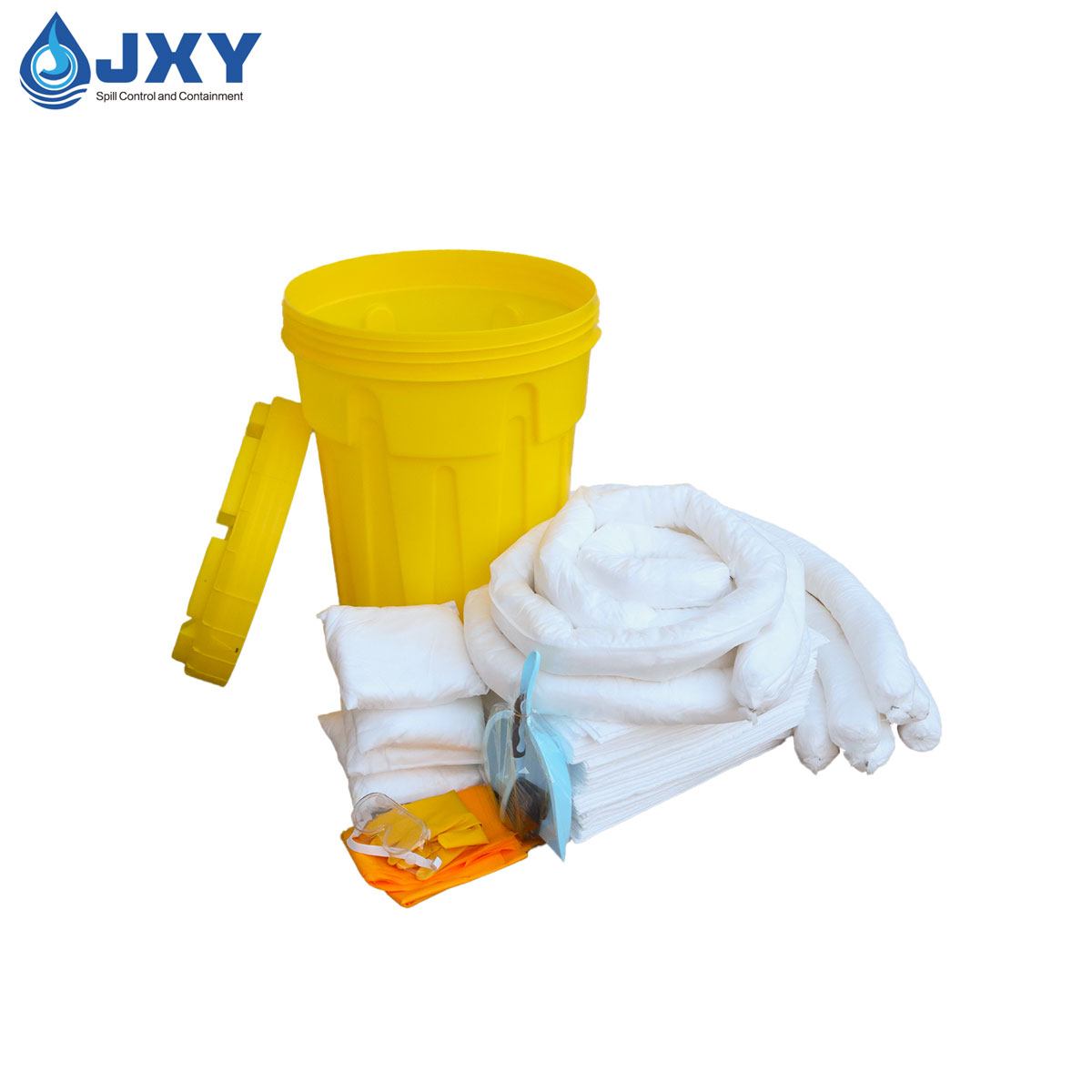
A ready-to-use spill kit combines first-response materials in one container so workers can access them quickly during an emergency.Depending on the application, spill kits may be packed in portable bags, drums, wheeled bins or larger mobile containers.Typical contents may include:Oil absorbent pads, socks, pillows, gloves, disposal bags and basic cleanup accessories.
Portable kits can be useful for vehicles and small maintenance areas. Wheeled kits can be positioned near workshops, generators or fuel handling zones.
The biggest kit is not automatically the best kit.
Accessibility matters just as much as capacity.
In a large facility, several strategically positioned kits may provide a faster response than one large kit stored in a central warehouse.
Oil spill response does not end when the liquid has been absorbed.
Used pads, socks and other contaminated materials still need to be collected and handled. Practical spill kits therefore often include protective gloves, disposal bags and basic cleanup accessories.
Industrial sites should also consider drain protection.
Even a relatively small spill can become harder to manage once oil enters a floor drain or stormwater system.
Where this risk exists, drain covers or barriers can be combined with absorbent socks and pads to keep the spill within a manageable area.
For higher-risk areas, portable spill containment berms can be placed beneath generators, drums, fuel tanks, machinery and IBCs before a leak occurs.
Absorbents collect spilled liquid. A containment berm helps keep that liquid inside a controlled area.
For construction sites, fuel handling areas and temporary maintenance zones, combining preventive containment with spill kits can create a more practical response system.
Marine contractors may need both land-based and water-based equipment. See Why Port Contractors Need Spill Response Equipment Before Construction.
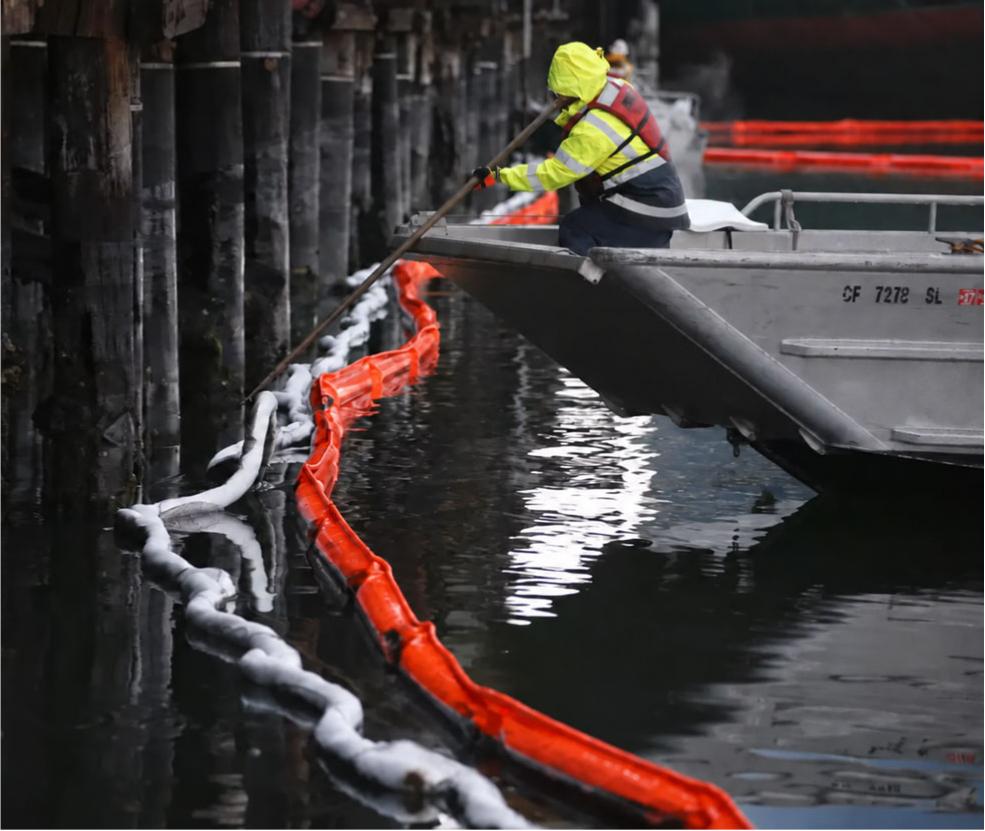 For a workshop, pads, socks and a suitable spill kit may be enough for many routine leaks.For a port, jetty or marine terminal, the key question is:What happens if the oil reaches the water?
Once oil begins moving with wind, current or vessel activity, standard absorbents alone may not provide enough control.A floating oil containment boom can be deployed to limit the movement of oil, protect a sensitive area or create a contained zone for recovery.The boom design should match the operating environment.
Sheltered harbor water may require a different boom from an exposed terminal, stronger-current area or offshore operation.This is why marine spill risks should normally be considered separately from ordinary land-based spill kit requirements.
For another example of how land and marine equipment can be combined, see Spill Response Equipment for LNG Bunkering Ports.
Containment controls the spread of oil, but it does not remove oil from the water.
For larger marine spill risks, recovery equipment may also be required, including an oil skimmer, transfer pump, hoses and temporary storage equipment.
The equipment should work as one system:
Oil Containment Boom → Oil Skimmer → Transfer Pump → Temporary Storage
The boom creates a controlled recovery area.
The skimmer removes floating oil.
The pump transfers the recovered oil or oil-water mixture, and temporary storage holds it until further treatment or disposal.
Absorbents can then be used for residual oil and final cleanup.
This is where a basic oil spill kit becomes a complete oil spill response package.
| Site / Application | Suggested Response Equipment |
Workshop / Maintenance Area | Oil absorbent pads, rolls, socks, pillows and portable spill kits |
Generator / Fuel Area | Spill kits, absorbents, socks, drain protection and secondary containment |
Industrial Facility | Multiple spill kits, absorbents, containment berms and drain protection |
Port / Jetty | Oil spill kits, oil-only absorbents, absorbent booms and floating oil containment boom |
Marine Terminal | Oil containment boom, skimmer, transfer pump, temporary storage and absorbents |
The goal is not to purchase every available product.
It is to make sure each realistic spill scenario has a practical first-response method.
To recommend an appropriate spill response package, a supplier needs to understand the application.
Useful information includes the project location, site type, expected oil or fuel, possible spill volume, whether the risk is on land or water, required response capacity and delivery destination.
For marine applications, also provide the required boom length, water conditions, current and wave information if available, deployment area and any existing tender specifications.
If you already have an equipment list, send the complete list so the supplier can check whether important containment, recovery, storage or deployment accessories are missing.
Providing this information also makes it easier to compare quotations from different suppliers, because you can check whether each proposal covers the equipment required for actual deployment rather than only the main products.
For a small workshop or maintenance area, a properly selected spill kit may be enough.
For a large industrial site, several spill kits may need to be combined with drain protection and secondary containment.
For a port or terminal, floating containment equipment may also be required.
For larger marine spill risks, containment, recovery, transfer and temporary storage should be considered together.
So instead of asking only:
“What size spill kit should we buy?”
It may be more useful to ask:
“What equipment do we need to control our actual spill risks?”
This approach helps buyers build a more practical response system without simply purchasing the largest kit or adding equipment that does not match the application.
JXY has been manufacturing oil spill response equipment since 2004 for ports, terminals, marine contractors and industrial applications.
Our product range includes oil absorbents, spill kits, oil containment booms, spill containment berms, skimmers, pumps, temporary storage systems and related response accessories.
If you are preparing spill response equipment for a port, terminal, shipyard, industrial plant, fuel handling area or marine project, send us your application and requirements.
We can help review your spill risk and recommend a practical equipment combination for your project.
Oil Absorbents + Spill Kits + Containment + Recovery + Temporary Storage
Contact JXY for Oil Spill Response Equipment Selection & Quotation.


