

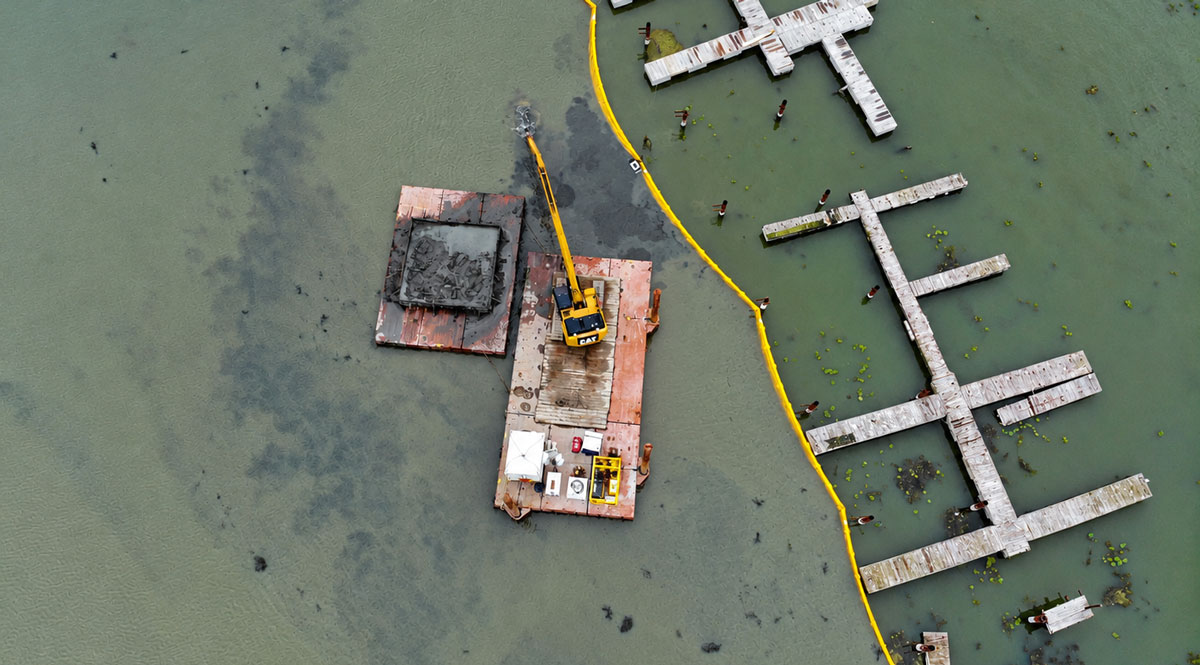
Marine construction projects play an important role in developing ports, harbors, coastal infrastructure, and offshore facilities. However, activities such as dredging, land reclamation, piling, and underwater excavation can disturb sediments on the seabed or riverbed.
Once these materials become suspended in water, they may travel beyond the construction area through currents, tides, and wave movement. This can increase water turbidity and potentially affect surrounding marine environments.
Managing suspended sediment is therefore an important consideration for contractors, project engineers, and environmental management teams.
Silt curtains, also known as turbidity curtains or sediment barriers, are widely used to help control sediment movement during marine construction activities.
Understanding their purpose, applications, and limitations can help project teams select appropriate sediment control solutions for different construction environments.
During dredging and underwater construction, sediment that has settled on the seabed can be released into the water column.
Fine particles such as clay and silt may remain suspended for extended periods, particularly in areas affected by currents or tidal movement.
As suspended sediment spreads, it can increase water turbidity and reduce light penetration. Depending on the project location and surrounding ecosystem, excessive sediment movement may also affect aquatic vegetation, sensitive habitats, and nearby marine activities.
For marine contractors, sediment management is not only an environmental consideration but also an important part of project planning.
Many marine construction projects operate under environmental management plans that include water quality monitoring, sediment control measures, and site-specific operating requirements.
A properly selected sediment control system can support these management objectives by helping limit the movement of suspended particles beyond designated working areas.
 What Is a Silt Curtain and How Does It Work?
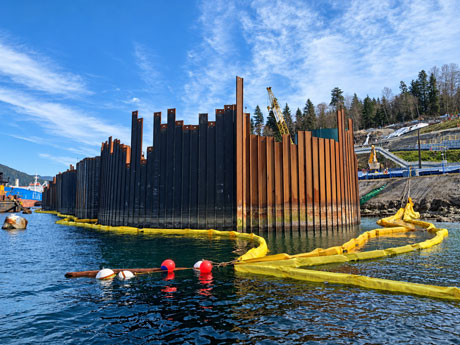
A silt curtain is a floating barrier designed to help contain or reduce the movement of suspended sediment in a body of water.
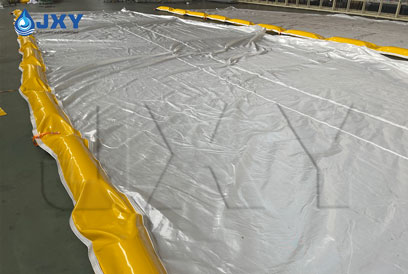
The system typically consists of a floating section at the water surface, a flexible curtain extending below the surface, and supporting components such as ballast, connectors, and anchoring arrangements.
When installed around or alongside a construction area, the curtain creates a temporary boundary that helps reduce sediment dispersion.
Its purpose is not to stop all water movement or completely prevent sediment from escaping. Instead, a suitable silt curtain helps manage the movement of suspended particles and may provide additional opportunities for sediment to settle within the controlled area.
Performance depends on several factors, including water conditions, sediment characteristics, curtain configuration, installation, and maintenance.
For a more detailed introduction to curtain configurations and operating conditions, read our What Is a Silt Curtain? Uses, Types, and Benefits Explained.
Silt curtains can support various marine and coastal construction activities where sediment disturbance may occur.
 Dredging and Harbor Maintenance
Dredging is one of the most common applications for silt curtains.
During maintenance or capital dredging, sediment is removed from the seabed to maintain navigation channels, deepen ports, or prepare areas for marine infrastructure.
These activities can generate suspended sediment that moves away from the dredging location.
Depending on the site conditions, silt curtains may be installed around designated working areas or along sensitive boundaries to help reduce sediment dispersion.
However, their suitability must be evaluated carefully in areas with strong currents, heavy vessel traffic, or changing operational requirements.
To explore this application further, see Why Are Silt Curtains Needed in Dredging Projects?.
Coastal reclamation projects involve creating new land through filling and other marine engineering activities.
During these operations, soil and filling materials may release fine particles into surrounding waters.
Silt curtains can form part of the sediment management strategy, particularly near filling areas and other locations where sediment movement requires control.
For larger reclamation projects, curtain systems may need to accommodate different water depths, changing tides, and extended deployment periods.
Construction of ports, terminals, jetties, bridges, seawalls, and offshore infrastructure frequently involves piling, excavation, and underwater foundation work.
These activities can disturb bottom sediments and create localized turbidity.
Depending on the project, silt curtains may be used to help manage suspended sediment around selected construction zones.
Their configuration and positioning must consider vessel access, construction equipment, water movement, and site safety.
Shoreline stabilization, coastal restoration, and waterfront improvement projects may also require temporary sediment control.
Where excavation, filling, or underwater construction takes place near sensitive aquatic environments, properly designed silt curtains can help reduce sediment movement during specific construction activities.
For additional application examples, explore Where Are Silt Curtains Used? Common Applications in Marine Construction.
 Why Different Marine Projects Need Different Silt Curtains
Although silt curtains serve a similar general purpose, marine construction environments can vary significantly.
A curtain used in a protected harbor may experience very different operating conditions from one installed near an exposed coastline or tidal channel.
Water depth is an important consideration because it influences the required curtain skirt depth and overall system configuration.
Current speed and tidal movement affect the hydraulic forces acting on the curtain. As water moves against the submerged fabric, the system may experience increased loading, displacement, or deformation.
Wave exposure and vessel-generated movement can also affect the flotation system, connectors, and anchoring arrangement.
Deployment duration is another important factor. A curtain intended for a short construction activity may have different material and durability requirements from a system expected to remain in service for several months.
Sediment characteristics and project environmental objectives must also be considered when selecting permeable or impermeable curtain materials.
For these reasons, contractors should evaluate actual site conditions rather than selecting a standard configuration based only on price or curtain dimensions.
Our existing guide, How to Choose the Right Silt Curtain for Your Marine Construction Project, provides further information about these selection considerations.
Selecting an appropriate silt curtain is only one part of effective sediment management.
Correct installation, anchoring, and ongoing maintenance are equally important.
Curtain positioning should reflect the construction activity, site layout, water movement, and applicable environmental requirements.
Improper anchoring or unsuitable curtain orientation may increase the forces acting on the barrier and reduce its effectiveness.
Routine inspection is also important, particularly during projects involving changing tides, frequent vessel movement, or extended deployment periods.
Connection points, flotation sections, anchoring arrangements, and curtain fabric should be checked for signs of damage, displacement, or excessive loading.
After strong weather conditions or significant changes in water movement, additional inspections may be necessary.
A silt curtain should therefore be considered one component of a broader sediment management plan rather than a complete solution on its own.
Water quality monitoring, construction methods, and operational controls may still be necessary to achieve the project's environmental objectives.
 Why Customized Silt Curtain Solutions Matter
Marine construction contractors often work on projects with unique environmental and operational requirements.
Standard products may not always provide the most suitable configuration for every application.
For example, different projects may require different curtain lengths, skirt depths, flotation capacities, materials, or connection arrangements.
A longer deployment period may require additional consideration of material durability and maintenance access. Projects in moving water may require reinforced components and carefully designed anchoring systems.
For this reason, working with an experienced silt curtain manufacturer can help contractors identify appropriate product configurations before procurement.
A project-based approach also helps ensure that technical discussions consider the intended application rather than focusing only on the total length of curtain required.
JXY manufactures and supplies customized silt curtain systems for marine construction, dredging, coastal reclamation, and environmental protection applications.
With experience in marine environmental protection equipment since 2004, JXY supports contractors, engineering companies, environmental service providers, and equipment distributors serving international markets.
Depending on project requirements, JXY can provide customized curtain dimensions, flotation systems, skirt materials, connectors, and other components.
Our product range includes solutions for different marine environments, from protected waters to more demanding construction conditions.
For projects requiring reinforced configurations, customers can also explore our DOT Type III Heavy Duty Silt Curtain.
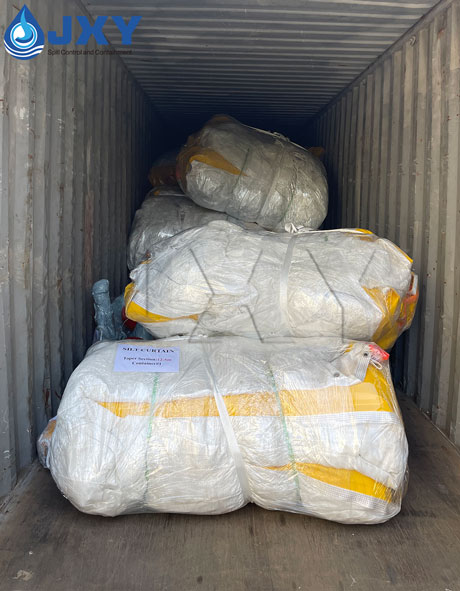
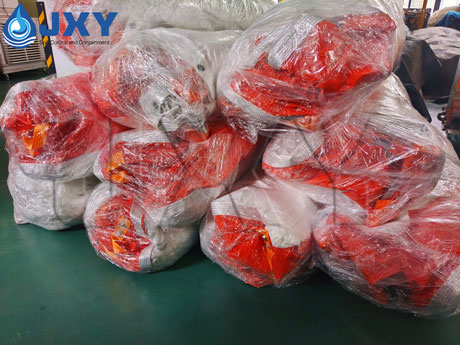
In addition to customized product supply, JXY supports project procurement with finished-product preparation, packing, and international shipment arrangements.
Customers are encouraged to share available project details, including deployment location, total required length, water depth, expected current conditions, and intended deployment duration.
This information helps our team review the application and discuss an appropriate curtain configuration.
The main purpose of a silt curtain is to help limit the movement of suspended sediment generated by activities such as dredging, excavation, piling, and reclamation. It forms a temporary barrier that supports sediment management around selected construction areas.
Certain reinforced silt curtain systems may be suitable for more demanding water conditions, but strong currents can create significant hydraulic loads. Suitability depends on the curtain design, site conditions, anchoring system, and deployment arrangement. Engineering assessment is important for high-current applications.
Silt curtains may be used for extended construction periods when the system is appropriately selected, installed, maintained, and monitored. Material durability, water conditions, anchoring, and inspection requirements should all be considered.
A supplier will generally need information about the project location, intended application, total curtain length, water depth, current and wave conditions, sediment control objectives, and expected deployment duration. Drawings or additional technical specifications can also be helpful.
No. Silt curtains are designed to help manage suspended sediment movement, not to create a completely sealed underwater enclosure. Their effectiveness depends on site conditions, installation, design, and the wider sediment management strategy.
Silt curtains play an important role in sediment management for dredging, coastal reclamation, port development, and other marine construction projects.
By helping limit the movement of suspended particles, they can support responsible construction practices and project-specific water quality management objectives.
However, successful performance depends on selecting a curtain system that matches the actual environmental and operational conditions.
JXY provides customized silt curtain solutions for contractors and marine engineering projects requiring reliable equipment supply.
Contact JXY to discuss your site conditions, required curtain dimensions, and deployment requirements.
Explore more technical information and project guidance in our Silt Curtain & Turbidity Control resource section.


