

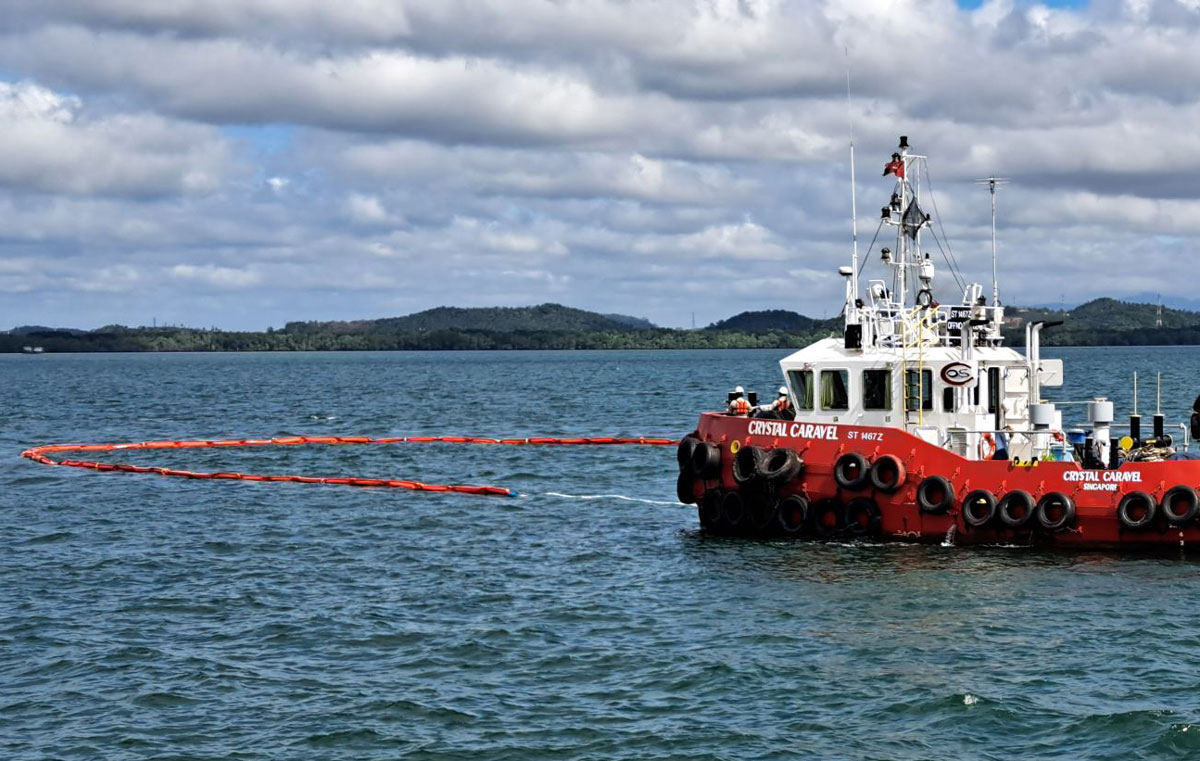
An oil spill at sea can quickly become a serious problem for coastal communities, ports, and marine environments. What begins as a small leak from a vessel may eventually affect beaches, fishing areas, industrial facilities, and sensitive marine habitats.
The oil spill involving the GEM NO. 2 tanker near the United Arab Emirates in October 2026 is a recent reminder of these risks. Oil pollution affected parts of the UAE's northern coastline, leading to precautionary beach closures, environmental monitoring, and cleanup operations. Even after authorities reported no further leakage from the tanker, work continued along affected coastal areas.
This incident highlights an important challenge: stopping an oil leak is only the beginning. Controlling the spread, recovering floating oil, and protecting the coastline are equally important parts of the response.
So how does coastal oil spill response actually work, and what can marine operators learn from incidents like this?
Oil released at sea rarely remains in one location. Depending on the type of oil, wind direction, currents, and wave conditions, it can spread across the water surface and travel considerable distances.
As floating oil moves toward the coast, the affected area can expand beyond the original accident site. A spill involving one vessel may eventually create challenges for multiple ports, beaches, fishing communities, and coastal businesses.
The consequences are not limited to environmental pollution. Port activities may be interrupted, recreational beaches may be temporarily closed, and marine facilities may need additional inspections or protective measures.
Certain coastal environments are particularly vulnerable. Mangroves, sheltered bays, and rocky shorelines can trap oil, making cleanup more difficult and increasing the risk of prolonged environmental impacts.
This is why offshore spill response requires more than controlling the original source. Response teams must also understand where the oil is moving and which coastal areas could be affected next.
Early assessment and preparation can make a significant difference in limiting the overall impact of a spill.
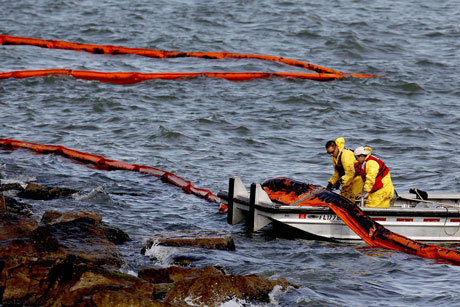 When an oil spill occurs, the first priority is to protect people, assess the situation, and stop or reduce further leakage whenever it is safe to do so.Response teams need to identify the source, estimate the amount and type of oil released, and assess the surrounding marine conditions.Weather forecasts, current patterns, vessel observations, and aerial or satellite information can help estimate how the oil may spread.This information allows responders to decide where containment equipment may be effective and which locations require immediate attention.
For example, if floating oil is moving toward a commercial harbor, protecting the entrance or selected berths may become a priority. If the slick is approaching a sensitive coastal habitat, a different protective arrangement may be required.The response must remain flexible because conditions at sea can change quickly.
An important lesson from major spill incidents is that source control, monitoring, and coastal protection often need to happen at the same time, rather than waiting for one activity to finish before beginning another.
Once the situation has been assessed, limiting the movement of floating oil is often an important part of the response.
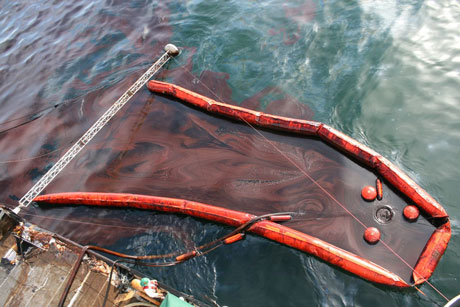
Oil containment booms are commonly used for this purpose. These floating barriers help contain oil within a designated area or guide it toward a location where recovery equipment can operate.
The principle is straightforward. Oil concentrated in an accessible area is generally easier to collect than oil that has spread across a large section of water.
However, effective containment depends heavily on the surrounding conditions.
In a sheltered harbor, a boom may help control oil near a vessel or fuel transfer area. In a river or coastal channel, an angled arrangement may be used to guide floating oil toward a collection point.
Offshore conditions are often more challenging. Strong currents may carry oil beneath a boom, while waves can allow oil to escape over or around it.
This means that selecting an oil boom is not simply about choosing the largest or strongest available model. The intended application, water conditions, and deployment arrangement are equally important.
For marine operators comparing different solutions, JXY's article How to Choose Oil Boom for Hot Climate Ports provides additional considerations for equipment selection.
Containment helps control the movement of oil, but it does not remove contamination from the water.
Once floating oil has been collected within a manageable area, recovery operations can begin.
Oil skimmers are widely used to recover oil from the water surface. Depending on the type of skimmer and the operating conditions, they can collect floating oil and transfer it to temporary storage.
Different spills may require different recovery approaches.
For example, relatively fluid oil can behave differently from thick, weathered oil. Debris, water movement, and available working space can also influence equipment performance.
Another important consideration is storage.
During recovery operations, the collected liquid may contain both oil and water. Suitable storage tanks or containers are therefore necessary to hold recovered material until it can be transferred for treatment or disposal.
Without adequate storage, even an effective skimmer may have to stop working.
This is why response teams need to consider oil containment booms, skimmers, pumps, and temporary storage as parts of one coordinated operation.
A successful recovery plan is not about individual equipment working separately, but about ensuring the complete process runs efficiently.
Preventing oil from reaching sensitive shorelines can sometimes be more practical than removing it after contamination has occurred.
Once oil enters beaches, rocky areas, or coastal vegetation, cleanup may become slower, more expensive, and more environmentally sensitive.
For this reason, shoreline protection is an important part of coastal oil spill response.
When several areas are at risk, response teams must identify which locations require priority protection.
These may include seawater intakes, fishing harbors, mangrove habitats, aquaculture facilities, and important recreational beaches.
The decision depends on the expected movement of the oil, local environmental conditions, and available response resources.
In suitable locations, temporary containment booms may be deployed to protect sensitive areas or divert floating oil toward safer recovery locations.
Some marine facilities also maintain permanent oil booms as part of their ongoing pollution preparedness.
For a broader discussion of long-term protection, read Why Permanent Oil Booms Matter for Marine Facilities.
Permanent and emergency protection serve different purposes, but both can contribute to reducing the consequences of marine pollution when properly planned.
When oil reaches the coast, cleanup becomes more complicated because every shoreline has different characteristics.
A sandy beach, rocky coastline, and mangrove area cannot necessarily be cleaned using the same methods.
On accessible beaches, response teams may collect visible oil and contaminated materials manually or with suitable mechanical equipment.
Rocky shorelines can be more difficult because oil may accumulate in cracks and uneven surfaces.
Sensitive coastal habitats require particular care. Aggressive cleaning methods can sometimes create additional environmental damage, so the response should balance contamination removal with protection of the surrounding ecosystem.
Worker safety and waste management are also essential.
Collected oil, contaminated sand, used absorbents, and other waste materials need appropriate handling, storage, transportation, and disposal.
Cleanup may continue even after the most visible pollution has disappeared. Environmental monitoring can help determine whether further action is necessary.
The objective is not simply to make the coastline look clean again, but to restore affected areas without causing unnecessary additional harm.
Oil absorbents are useful during many stages of spill response, particularly for smaller spills, localized contamination, and final cleanup work.
Oil-only absorbent pads can help remove oily residues from accessible surfaces, equipment, and suitable shoreline areas.
Absorbent booms may be used to collect smaller quantities of floating oil in sheltered locations, while absorbent rolls can help protect working areas from residual contamination.
However, absorbents have practical limitations.
For a large offshore spill, relying entirely on absorbent materials would usually be inefficient and could generate substantial quantities of contaminated waste.
Mechanical recovery is generally more appropriate for collecting significant volumes of accessible floating oil.
Absorbents are most valuable when they complement other response equipment rather than replace it.
For ports and industrial facilities preparing their own emergency supplies, maintaining the right combination of absorbents and recovery equipment can improve response readiness.
JXY's related article What Should Be Included in an Oil Spill Response Kit for Ports and Industrial Sites? offers further guidance on preparing suitable equipment.
The 2026 oil spill near the UAE demonstrates how an offshore incident can create challenges well beyond the location of the damaged vessel.
Although the source of leakage was eventually reported to be under control, coastal monitoring and cleanup activities remained necessary.
For countries with extensive marine infrastructure, the potential impact of offshore pollution can extend to tourism, fisheries, ports, industrial operations, and coastal ecosystems.
The incident also reminds us that oil spill response cannot rely on a single method.
Containment may help control floating oil, recovery equipment removes accessible contamination, and shoreline protection reduces the risk to sensitive areas.
Each activity plays a different role.
Perhaps the most important lesson is that preparation before an incident can make the response more organized and effective.
Understanding potential spill scenarios, identifying sensitive locations, and maintaining suitable equipment are practical steps that marine operators can take long before an emergency occurs.
For ports, marine contractors, and industrial facilities, effective spill preparedness begins with understanding their actual operating environment.
A sheltered harbor may require different equipment from an exposed coastal terminal. Similarly, a small fuel spill near a jetty presents different challenges from a larger offshore release.
Before purchasing equipment, operators should consider the likely spill sources, expected oil types, water conditions, and locations requiring protection.
A practical response arrangement may involve containment booms to control floating oil, skimmers to recover it, temporary storage tanks to hold collected liquid, and absorbents for localized or final cleanup.
However, equipment alone is not enough.
Trained personnel, accessible storage, regular inspections, and clear deployment procedures are equally important.
Response organizations should also understand how different equipment will work together during an incident.
For buyers preparing an equipment inventory, the Port Oil Spill Response Equipment Checklist provides a useful starting point.
The goal is not necessarily to purchase the largest response package, but to develop a reliable system suited to the facility's actual risks.
Oil spills remain a concern for coastal communities and marine industries around the world.
While no response system can eliminate every environmental risk, appropriate planning, reliable equipment, and coordinated operations can help reduce the consequences of an incident.
At JXY, we have manufactured oil spill response products and equipment since 2004, supplying international customers involved in marine and industrial applications.
Our product range includes oil containment booms, oil skimmers, oil absorbents, and temporary storage solutions that support different stages of spill response.
We understand that each project has its own challenges, and equipment selection should reflect the actual site conditions and operational requirements.
For organizations reviewing their spill response capabilities, sharing project information with an experienced manufacturer can be a useful first step toward identifying suitable equipment options.
Ultimately, effective coastal oil spill response is not about one particular product. It is about making sure the right resources are available when they are needed.
From offshore containment to shoreline cleanup, preparation and coordination remain the foundation of a successful response.


