


Oil spills do not always involve major accidents or large volumes of crude oil. In many marine and industrial environments, relatively small amounts of fuel, lubricating oil, or other petroleum products can enter the water during everyday operations.
A minor leak at a marina, an accidental discharge near a loading terminal, or oil residues collecting along an industrial drainage channel can all create environmental and operational concerns.
While large spills often require extensive containment and recovery equipment, smaller incidents may benefit from a more targeted approach.
This is where oil absorbent booms play an important role.
Designed to collect oil from water surfaces, these flexible sorbent products are commonly used in ports, marinas, industrial facilities, inland waterways, and spill cleanup operations.
However, their effectiveness depends on understanding where they should be deployed, what type of oil needs to be recovered, and how they fit into a broader spill response strategy.
In this article, we explore five common applications of oil absorbent booms and the practical considerations that help operators use them effectively.
Oil absorbent booms, also known as oil sorbent booms, are elongated, flexible products designed to collect oil and petroleum-based liquids.
Many oil-only absorbent booms are manufactured using polypropylene sorbent materials, which are oleophilic and hydrophobic. This means they attract oil while resisting water uptake.
Unlike conventional oil containment booms, which primarily act as floating barriers to control the movement of spilled oil, absorbent booms recover oil through the sorption properties of their materials.
Their cylindrical shape makes them relatively easy to position along waterfront structures, around equipment, or within confined areas where floating oil may accumulate.
They can also be connected or positioned in overlapping arrangements to cover a longer section of water.
The amount of oil a boom can retain depends on several factors, including its material, dimensions, construction, oil viscosity, and actual operating conditions.
Importantly, absorbent booms are not intended to replace conventional containment booms in every situation. They do not have the same structural features needed to retain substantial quantities of floating oil in moving water.
Instead, they are particularly useful for recovering relatively small amounts of oil, addressing thin surface contamination, and supporting larger spill response systems.
For a wider understanding of the equipment used during marine and industrial emergencies, explore our Oil Spill Response Equipment Guide.
Ports and commercial harbors are among the most common environments where oil absorbent booms can be used.
These facilities bring together numerous activities that involve petroleum products, including vessel fueling, cargo handling, equipment maintenance, and routine marine operations.
Even when strict operational procedures are followed, small fuel leaks or accidental releases may occasionally occur.
In sheltered harbor basins, floating oil can accumulate along quay walls, around moored vessels, or in corners where wind and water movement concentrate surface contamination.
Oil absorbent booms provide a practical way to collect small quantities of floating oil from these locations.
For example, a maintenance team may position absorbent booms along the waterline beside a dock where a minor diesel leak has occurred. The booms remain in contact with the affected surface area, allowing their sorbent material to collect oil.
Their flexible structure is useful where access is limited or where rigid equipment would be difficult to position.
However, harbor conditions can change throughout the day. Vessel movements, propeller wash, tidal currents, and wind may affect boom placement and performance.
This makes regular inspection and timely replacement essential.
 Why Absorbent Booms Are Useful in Harbor Maintenance
One advantage of absorbent booms is their ability to support localized cleanup without requiring large recovery systems for every small incident.
They can form part of a port's routine pollution response inventory, alongside absorbent pads, temporary containment booms, and other equipment.
Nevertheless, facilities handling substantial volumes of petroleum should maintain appropriate containment and recovery capabilities for incidents that exceed the capacity of sorbent materials.
For a broader overview of emergency preparedness in port environments, see our Port Oil Spill Response Equipment Checklist.
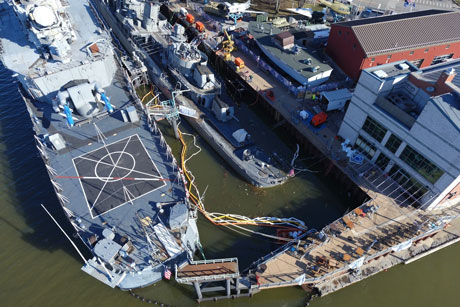
Marinas and boatyards face a different type of oil pollution risk.
Compared with large commercial ports, these facilities typically accommodate recreational boats, yachts, small workboats, and vessels undergoing maintenance.
Although individual incidents may involve relatively small quantities of oil, repeated minor leaks can affect water quality and create an unpleasant environment for marina users.
Common sources of contamination include fuel transfer activities, engine maintenance, hydraulic fluid leaks, and oil residues released during repair work.
In calm marina basins, floating oil may remain near individual berths or collect along floating pontoons.
Oil absorbent booms can be positioned in these areas to recover accessible oil from the water surface.
Their flexible design allows operators to place them along the edges of docks, around selected maintenance areas, or near locations where small leaks have been identified.
 Supporting Routine Marina Environmental Management
For marina operators, spill response is not limited to dealing with emergencies.It is also part of maintaining a clean and professionally managed waterfront.Keeping suitable sorbent materials available enables maintenance teams to respond more promptly when small leaks occur.
For example, during vessel servicing, an absorbent boom may be used as part of a precautionary setup around a designated work area, where site conditions and safety procedures permit.If oil is released, the boom can help collect accessible surface contamination while the original source of the leak is addressed.This application is particularly relevant to sheltered waters with limited wave action.
However, absorbent booms should not be considered a substitute for proper fuel handling procedures, preventive maintenance, or an approved spill response plan.
They are one part of a wider environmental management approach.
Oil absorbent booms are not limited to marine applications.
They are also useful in certain industrial environments where oil contamination may enter water collection systems.
Manufacturing plants, petroleum storage terminals, power stations, equipment maintenance facilities, and other industrial sites frequently handle lubricants, hydraulic fluids, and petroleum-based products.
Although prevention and secondary containment should remain the first priorities, operators may still need suitable materials to recover oil from designated collection areas.
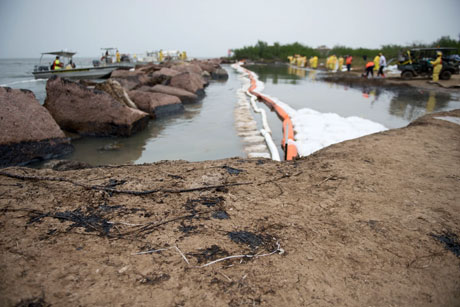
Oil absorbent booms can be used in appropriate drainage channels, collection pits, sumps, and other relatively calm water areas where floating oil is accessible.
For instance, an industrial maintenance facility may discover a thin layer of hydraulic oil on the surface of water accumulated in a collection pit.
Where the liquid is compatible with the sorbent and conditions are safe, absorbent booms can help remove floating contamination before further treatment or disposal.
Their elongated shape can be convenient for positioning along narrow channels or around the edges of collection areas.
However, placing absorbent booms in drainage systems requires careful consideration.
They should not obstruct critical drainage capacity, interfere with process equipment, or create unsafe conditions during heavy rainfall or high-flow events.
 Absorbent Booms and Industrial Spill Prevention
A particularly important distinction is the difference between recovering oil and preventing its uncontrolled release.
Absorbent booms can help collect oil after contamination occurs, but they are not a replacement for engineered secondary containment systems.
Facilities that store or transfer significant quantities of oil may require dedicated spill containment berms, bunds, collection systems, and other preventive measures.
For more information about managing petroleum releases at industrial facilities, read our article Why Secondary Containment Matters for Fuel and Oil Spill Control.
A well-prepared facility combines prevention, early detection, effective recovery, and responsible waste management rather than relying on any single product.
Rivers, streams, canals, and inland waterways can also experience oil pollution.
Potential sources include road runoff, industrial incidents, equipment failures, and accidental releases near waterside facilities.
Unlike enclosed collection pits or sheltered marina basins, inland waterways may have moving currents, changing water levels, and irregular shorelines.
These conditions directly influence whether absorbent booms are appropriate.
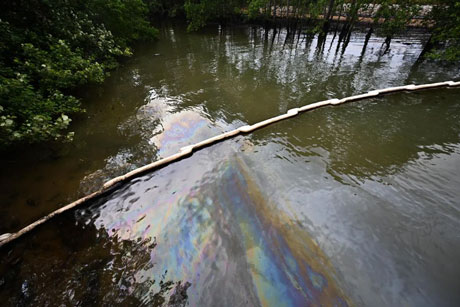
In relatively calm or slow-moving water, oil absorbent booms may be used to recover floating petroleum residues from selected locations.
They can be positioned along shorelines, within protected water pockets, or across narrow drainage channels when the installation is suitable for the expected flow conditions.
For example, following a small oil release into a sheltered drainage canal, responders may deploy an absorbent boom near an accessible collection point.
The boom can absorb oil that contacts its surface, helping with localized recovery.
However, an absorbent boom should not be expected to function as a strong physical barrier across a fast-moving river.
Its lightweight, flexible construction and lack of a submerged containment skirt limit its ability to control oil movement under significant current forces.
 Why Water Conditions Matter
Successful deployment requires more than simply placing a boom across the water.
Responders should consider the direction and speed of the current, the width of the waterway, shoreline access, floating debris, and whether the boom can be safely secured.
In some locations, a conventional containment boom may be needed first to divert or concentrate oil toward a designated collection area.
Absorbent booms can then assist in recovering smaller amounts of oil or residual surface sheen.
In other situations, different recovery methods may be more suitable.
The important principle is to select the response equipment based on actual environmental conditions rather than assuming that one type of boom works everywhere.
One of the most valuable applications of oil absorbent booms is their supporting role during organized spill response operations.
When a significant oil release occurs, the initial response often focuses on stopping the source, limiting the spread of contamination, and protecting sensitive areas.
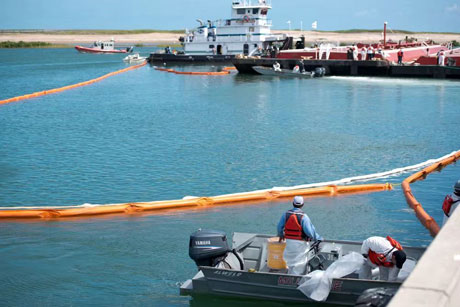
Depending on the spill and site conditions, responders may deploy conventional oil containment booms to control floating oil.
Mechanical recovery equipment, such as oil skimmers, may then be used to recover concentrated oil from the water surface.
However, even after the main recovery operation, smaller quantities of oil may remain.
Thin oil films can collect along containment boundaries, around structures, or near the shoreline.
This is where absorbent booms can provide additional value.
They may be positioned inside a containment area to recover residual oil, placed along accessible shorelines, or used around specific locations requiring further cleanup.
Although their names are similar, oil absorbent booms and oil containment booms perform different functions.
A conventional containment boom is designed primarily to restrict or redirect the movement of floating oil. Its flotation chamber, freeboard, submerged skirt, and structural components help create a physical barrier.
An absorbent boom, on the other hand, is designed primarily to collect oil through its sorbent material.
During a cleanup operation, the two products may complement each other.
For example, a containment boom may help concentrate floating oil in an accessible recovery area. After bulk oil recovery, absorbent booms may help collect remaining surface contamination.
This combined approach is often more practical than expecting absorbent materials to handle large amounts of freshly spilled oil on their own.
For facilities requiring continuous protection, there is also a distinction between temporary cleanup materials and engineered long-term containment systems.
Our article Why Permanent Oil Booms Matter for Marine Facilities explains how permanent containment solutions can support ongoing protection of marine infrastructure.
Understanding where absorbent booms are used is only the first step.
Selecting an appropriate product requires consideration of the actual spill risk, operating environment, and expected recovery requirements.
 Material Compatibility and Oil Type
Many commonly used oil-only absorbent booms contain polypropylene sorbent material.
These products are generally intended for petroleum-based liquids, but the exact suitability depends on the liquid being handled and the manufacturer's product specifications.
Diesel fuel, lubricating oil, hydraulic oil, and heavier petroleum products may behave differently during absorption and recovery.
Oil viscosity can influence how easily the liquid enters the sorbent structure and how much oil the boom can retain.
For unusual chemicals or mixed spills, material compatibility should be checked before deployment.
Oil-only polypropylene products should not automatically be treated as suitable for every chemical spill.
Absorbent booms are available in different diameters and lengths.
Smaller sizes may be convenient for confined collection areas, while larger products may be suitable where greater contact area or sorbent capacity is required.
However, a larger diameter does not automatically guarantee better performance in every situation.
The construction of the boom, sorbent material, oil type, and surrounding conditions all affect practical performance.
When comparing products, buyers should review the manufacturer's stated dimensions, material details, and relevant performance data rather than relying only on appearance.
Even a suitable absorbent boom may perform poorly if it is deployed in the wrong location.
Calm or sheltered conditions generally allow better contact between the oil and the sorbent material.
Where currents or waves are significant, alternative containment arrangements or additional equipment may be needed.
Absorbent booms also require regular monitoring.
Once a boom becomes heavily saturated, damaged, or no longer performs effectively, it should be recovered and replaced as appropriate.
Used sorbents must be collected, stored, transported, and disposed of in accordance with applicable local regulations and the nature of the recovered contamination.
Responsible handling of oil-contaminated waste is an essential part of completing the cleanup process.
Oil absorbent booms are useful, but effective spill preparedness involves more than stocking a single type of absorbent product.
A marina may primarily need materials for small fuel leaks near berths. An industrial facility may focus on collection areas and drainage protection. A commercial port may require a combination of sorbents, containment booms, recovery equipment, and trained response personnel.
The most appropriate equipment inventory depends on the facility's actual activities and environmental exposure.
It is also important to think about how quickly response materials can be accessed.
Absorbent products stored far from high-risk locations may be less useful during the early stages of an incident.
Regular inspection, accessible storage, staff training, and clearly defined response procedures can improve preparedness.
For operations involving multiple spill risks, a properly configured spill response kit may be a practical solution.
Our guide, What Should Be Included in an Oil Spill Response Kit for Ports and Industrial Sites?, discusses how different types of response products can support facility preparedness.
The goal is not simply to purchase more equipment. It is to ensure that the available equipment matches the situations a facility may realistically encounter.
At JXY, we understand that different operating environments require different oil spill response solutions.
A sheltered marina, an industrial drainage area, and a busy commercial terminal may all encounter floating oil contamination, but their equipment requirements can vary considerably.
As a manufacturer of oil spill response products and equipment since 2004, JXY supplies a range of solutions for marine and industrial applications, including oil absorbent products, containment booms, and supporting response equipment.
Our manufacturing experience allows us to support customers looking for practical product options suited to their operational requirements.
Whether the application involves routine waterfront maintenance, industrial spill preparedness, or organized cleanup activities, selecting the appropriate equipment is an important part of protecting water environments.
Explore our Oil Absorbent Products or visit JXY Oil Spill Response Solutions to learn more about our product range.
Oil absorbent booms serve a practical role in five common environments: ports and harbors, marinas and boatyards, industrial facilities, inland waterways, and oil spill cleanup operations.
Their flexibility and ability to recover floating oil make them useful for localized contamination and supporting recovery activities.
However, their limitations are equally important to understand.
Absorbent booms work best when selected and deployed according to the oil type, water conditions, and actual cleanup objectives. They cannot replace appropriate containment, prevention, or bulk recovery equipment in every situation.
For marine and industrial operators, effective oil spill preparedness means combining the right products with suitable operating procedures.
By understanding where oil absorbent booms are most useful, facilities can make more informed equipment decisions and improve their readiness to manage oil pollution.
Contact JXY to discuss your application, operating environment, and product requirements.


